
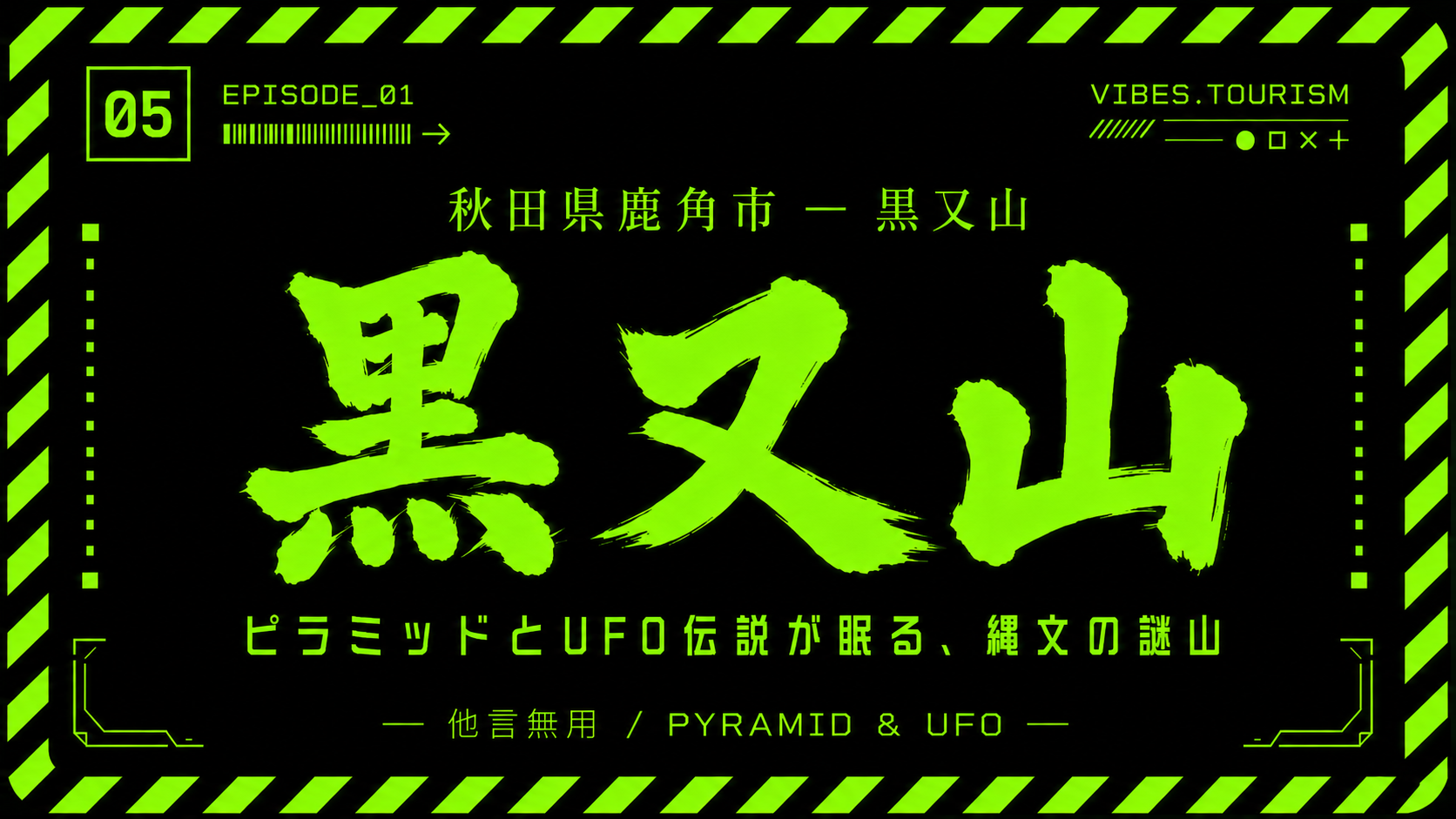

Kuromanta.
The Cone That Sends Gods.
KUROMANTA — NEON PILGRIMAGE
Ninety years ago a painter drew a UFO over a small triangular cone in Akita. Ten meters below it sleeps a stone coffin, and at the summit a compass still goes wild today. This is no tale of the past. It is the story of a Jomon “transmitter” that is still running.
SCROLL ▽Chapter 1 — A Painting With a UFO in It
Let me begin with an old painting.
It was made by a Japanese painter named Toya Banzan. Born in Aomori, active from the Meiji into the Showa era, he was reasonably well known in his day. You don’t need to remember the name. What matters is a single ink painting he made in the seventeenth year of Showa.
The painting looks like a quiet landscape. A gentle ridgeline, a village at the foot, the air rendered in bleeding ink. It is a scene of a certain mountain in Akita. And yet, at one point in the sky, something has been drawn that you cannot overlook: a disc-shaped object, trailing a tail of light. In the margin, in the painter’s own hand, are the words: “The pyramid Kuromata-yama, commonly called Kuromanta.”
The seventeenth year of Showa is 1942. The middle of the Pacific War. The American incident that spread the phrase “flying saucer” around the world would not happen for another five years. The word UFO would not enter common use until later still. In that era, this painter drew a flying object into the wartime sky of Akita. And not above just any mountain — above the one he himself had labeled a “pyramid.”
Let me tell you about that mountain. Kazuno City, Akita Prefecture. In a place called Towada-Oyu, not far from Lake Towada, the mountain stands. Its height is a mere two hundred eighty meters. Small enough to call a hill behind the house. But its shape is strange. From every angle, it forms a clean triangular cone, as if drawn with a ruler. Natural mountains are worn down by wind and water; their ridgelines crumble, their summits split into several. This mountain alone tapers to a single point, as though someone had deliberately shaped it.
The locals do not call it by its formal name, Kuromata-yama. From long ago, they have simply called it Kuromanta. There are several theories about the name; one holds that it comes from an Ainu word meaning “that which is not human.”
Just two kilometers southwest of this mountain lies a Jomon site that is one of the prides of Japanese archaeology: the Oyu Stone Circles. Two rings of stone, Manza and Nonakado, the larger more than fifty meters across. About four thousand years ago, the Jomon people carried stones one by one from a river two to four kilometers away and laid them out. Some say it was a grave, some say a calendar; what it was truly built for is still not fully known.
Now picture the map in your head. The sacred ring the Jomon laid down four thousand years ago, at enormous cost in labor. And just to its northeast, a triangular cone rises as if ruled by a straightedge. Northeast is the so-called demon’s gate, the unlucky quarter.
The Jomon people looked up at this mountain. Four thousand years later, a Showa-era painter drew a disc above that same mountain.
And on the summit where those two gazes cross, a shrine now stands. It is called Hongu Shrine. Pass under the torii and climb, and before the hall there is a spot known to those in the know. Set a compass on your palm there, and the needle loses north. It spins and wavers and points nowhere. Lift it from the ground and it points north again, obediently. Only in that patch before the hall, a few tatami mats wide, the earth’s magnet is disturbed.
The ring of stones from four thousand years ago. The painting of a disc from ninety years ago. And a compass that, even today, goes wild in anyone’s hand who climbs there. The torii at the trailhead is open today, and the needle wavers today.
There was a man who first declared this little triangular cone a pyramid. By profession, he was a Christian minister.
 CHAPTER 01
Chapter 2 — The Minister Who Saw “Japan” in Egypt
The man’s name was Sakai Katsutoki.
Born in Yamagata in 1874. Baptized into Christianity at fifteen, he became a minister. His starting point was that of a monotheist evangelist. And then, at a certain point, he began to sink into the study of ultra-ancient history.
The trigger was a single old document. The Takeuchi Monjo, said to be handed down at a certain shrine in Ibaraki. Sakai believed it to be a genuine ultra-ancient record that would rewrite history. It said: in the remote past, the center of the world was Japan. The ancestors of the emperors rode a flying vessel called the Ame-no-ukifune, traveling the whole world and ruling its various lands.
Sakai never doubted this premise — that ancient Japan had ruled the world. Every part of his reasoning begins here.
In 1927, Sakai was dispatched by the army to the Middle East for the study of the Jews, and in Egypt he laid eyes on a real pyramid. An ordinary person, in that moment, would be overwhelmed: “There is nothing like this in Japan.” But Sakai’s mind, having swallowed the Takeuchi Monjo whole, turned in exactly the opposite direction.
To him, the pyramid was not a king’s tomb. It was a device by which gods and humans communicated, a temple for worshipping the sun. And sun worship, he believed, was the religion of ancient Japan. Then the rest was simple. The Japanese race, who circled the world in a flying ship, built sun temples — pyramids — wherever they went. Egypt’s was merely one “copy” the Japanese left in a foreign land. The original home of the pyramid was Japan.
As the clincher, Sakai produced the “sun stone.” The summit of a true pyramid, he said, must bear a spherical sun stone. And yet, atop Egypt’s surviving pyramids, there is no such stone. Here the theory might well collapse — but again Sakai read it backwards. Egypt’s, having lost the sun stone from its peak, was the very proof that it was not the original: the branch family, not the head.
What is strange is what came next. In later years, a gold plate unearthed at Cuenca in South America, depicting a pyramid, showed a round object at its peak — Sakai’s sun stone. A book by a French archaeologist also records that the summit of Egypt’s Great Pyramid once held a spherical stone, about one point eight seven meters across, that aligned exactly with the winter-solstice sun. The very word “sun stone” was Sakai’s own coinage, the first in the world. In an age short of photographs and references, how did a single Japanese minister know of the “sphere on the peak” common to pyramids the world over? This, too, is counted among the unsolved mysteries.
With the measuring stick he had thus assembled, Sakai walked across Japan, measuring its mountains. The conditions for a pyramid were three. One, a well-formed triangular mountain. Two, near the summit, a spherical “sun stone” ringed by aligned stones. Three, apart from the main body, a low “worship hall” mountain standing nearby for distant worship.
The first he certified was Mount Ashitake in Hiroshima. In 1934, he declared this triangular cone a “sun temple built twenty-three thousand years ago.” Japan’s pyramid number one. Newspapers wrote it up, and sightseers poured into the Hiroshima mountain village. From there, one after another, Japanese pyramids were “discovered”: Oishigami in Aomori, Uwanodaira in Hida-Takayama. Within this same lineage, Kuromanta in Akita, too, came to be counted as one of Japan’s pyramids.
Here I want to pin down, in his own words, what Sakai meant by a “Japanese pyramid.” His definition runs thus. A Japanese pyramid is not, like Egypt’s, an artificial structure piled up from nothing. It is built upon a natural mountain or terrain, with stone and earth heaped half by human hand. And over thousands of years, weathered by the climate, it came to look like a natural mountain — just as a burial mound, seen from the ground, cannot be told apart from a natural hill.
Keep this definition in mind. Half a century later, when scientists scraped into the ground of Kuromanta, what came out matched these words of his with an eeriness hard to dismiss.
His book, The Pyramids of Ancient Japan, was published, but Sakai’s works were often seized by the special higher police, and he himself was detained. That Japan’s emperor should reign over the world, that an advanced civilization had existed in ultra-ancient Japan — such claims grazed the times.
And so the minister’s reading was pushed into a corner of history.
Half a century later. Long after Sakai had departed this world, a wholly different set of people climbed this mountain — this time with the scalpel of science in hand.
 CHAPTER 02
Chapter 3 — They Came to Debunk, and Left Having Confirmed
1992. Archaeologists went into Kuromanta.
It was the Kuromata-yama Comprehensive Survey Team, formed around researchers from Doshisha University. They hauled the era’s latest equipment to the summit — ground-penetrating radar, infrared photography, aerial photography. Less to confirm an ancient romance than to determine, by science, what the thing really was.
First, they established one fact. The mountain body itself is a natural mountain. A genuine, naturally formed mountain raised by upwelling lava. It was not “a pyramid artificial through and through.”
The problem was its surface.
The radar caught a terraced structure on the slope — seven to ten tiers in all. Each projecting platform was about ten meters wide and two or three meters high. And its surface bore traces of small stones pasted densely across it. A natural mountain as foundation, carved by human hands into tiers, faced with stone and dressed up. It was the very method by which the Maya and Aztec of Central and South America built their “step pyramids.” A natural mountain — but the surface had been worked by people.
Recall Sakai’s definition from Chapter 2. A Japanese pyramid is built on a natural mountain, with stone and earth piled half-artificially. The definition that the ridiculed minister spoke half a century before, the archaeologists’ radar traced exactly.
From the surface came a great number of river stones that ought not to be there. Rounded stones with the corners worn off. They do not roll up a mountain on their own. Someone carried them up, one by one, from the river at the foot. The stone circle two kilometers away, mentioned in Chapter 1, was also made of stones carried from a river. The same labor was paid out, in nearly the same era, at two places two kilometers apart.
The finds were many, too. Stone tools, earthenware, clay objects, and even iron nails and old coins. What stands out above all: incised stone implements — stone tools carved with patterns — came out in a cluster of sixteen, across the summit, the slope, and the foot. For so many large ones to emerge concentrated in so narrow an area is held to be extraordinary in the extreme.
And the greatest thing the survey team struck lay underground.
Directly beneath the hall at the summit, a massive rock was buried. Recall, from Chapter 2, the summit sun stone Sakai Katsutoki listed among the conditions for a pyramid. This giant rock asleep beneath the hall — could it be the sun stone Sakai spoke of? Some see it that way.
Further, a little below the summit. At a depth of about ten meters, they found a cavity roughly ten meters on a side, walled on three sides — south, west, and north. According to the report, within that cavity is something like a stone coffin. It is highly possible, they say, that someone is buried there.
The peak of a triangular cone, nearest to heaven. And below even that. In a box of stone where no light reaches, someone is sleeping.
This cavity has since been confirmed anew. In 2022, with the cooperation of Tohoku University, a re-survey using the latest radar equipment was carried out for a television program. With precision beyond compare to thirty years before, they looked through the mountain once more. The cavity was, as before, right there.
What the scholars who came to debunk carried home was not the conclusion “it was just a mountain.” The carved steps. The carried river stones. The concentrated ritual implements. The summit sun stone. The stone coffin ten meters down. It was the more troublesome conclusion: “there is, indeed, something here.”
Whom did the Jomon bury, and why, so strictly, in the place nearest to heaven? And why a triangular cone? Not a round mound, not a square barrow, but this shape that tapers to a single point toward the sky.
A study concerning that very “shape” would arrive, in later years, from Egypt.
 CHAPTER 03
Chapter 4 — That Triangle Fires Waves Toward the Sky
There is a phrase: pyramid power. The notion that a strange force dwells in the very shape of the triangular cone.
Its origin goes back to 1930, at Giza in Egypt. A Frenchman named Antoine Bovis, touring the interior of the Great Pyramid, noticed a small animal’s carcass lying at his feet. It had not rotted. It was dried through, like a mummy. In the depths of a damp stone chamber, it had dried without decaying. Back home, he made a cardboard model of a pyramid and placed raw meat and eggs inside. They, too, dried. They did not rot; they shriveled. This, it is said, is the first instance from which the phrase “pyramid power” was born.
The story moved greatly in 1950s Czechoslovakia. A radio technician named Karel Drbal made a small cardboard pyramid about fifteen centimeters tall and placed inside it a razor blade worn dull. The blade, it is said, came to cut again. For this “pyramid razor-sharpener,” he obtained a patent in 1959.
When this story landed in 1970s Japan, it became something of a social phenomenon. Put a flower in and it dries into a dried flower; milk does not spoil; meditate in a pyramid-shaped tent and the head clears. It need not be a real Egyptian pyramid. A paper model would do. The shape alone, if correct, sufficed. Such was the pitch. Science dismissed it as pseudoscience. The drying is explained by air convection; the blade cutting is suggestion. Pyramid power, as a Showa-era fad, was in time forgotten.
That assessment wavered in 2018.
A research team at ITMO University in Saint Petersburg, Russia, and others published a paper in the applied-physics journal Journal of Applied Physics. The content was not occult. They calculated, in physics, how the energy of an electromagnetic wave of a certain wavelength behaves inside the Great Pyramid of Giza when it strikes it. A study in electromagnetics.
The result was this. The pyramid was structured so as to concentrate the energy of incoming electromagnetic waves into three internal spaces. Those three: the King’s Chamber, the Queen’s Chamber, and the underground room below them. The energy gathered, just so, into the pyramid’s “most important rooms.”
Here, recall Chapter 3. That depth of ten meters beneath the summit of Kuromanta. The cavity, walled on three sides, where a stone coffin sleeps.
Let me draw the line. Egypt’s finely worked limestone pyramid and the Akita cone, carved into tiers from earth and stone, cannot be spoken of by the same physics. There is no evidence that Kuromanta’s stone coffin is bathed in electromagnetic waves. None.
Still, the paper held one more result. When pyramids were placed side by side in simulation, resonance arose between them, and the way the electromagnetic field gathered grew stronger still.
Alone, it is merely a shape. Lined up, they answer one another.
And Kuromanta is lined up.
Drive about an hour, cross the prefectural border into Shingo Village in Aomori, and there is another pyramid. The Oishigami Pyramid. The name that survives as its discoverer is that of the painter from Chapter 1 — Toya Banzan himself, who drew the disc in the sky. In 1934, the same year as the Ashitake commotion, he brought this mountain into the world as “the second pyramid of ancient Japan.” The same hand that painted Kuromanta reached to this mountain thirty-two kilometers away. At Oishigami, the sun stone, the constellation stone, and the mirror stone — said to have “existed but been destroyed” at Kuromanta — stand even now, in the flesh, on the slope.
Shingo Village has one more famous site. Ten minutes farther by car from Oishigami: the “Tomb of Christ.” A fine grave, and the tradition that supports it, exist there in reality. The one crucified on Golgotha was Christ’s younger brother, Isukiri; Christ himself secretly fled to Japan and lived out his days in this village — so the tradition runs. The one who brought this mound into the world as the “Tomb of Christ” also traces back to the Takeuchi Monjo and those around it. The painter who drew the disc over Kuromanta, the painter who discovered Oishigami, and the Tomb of Christ — the three mysteries of the Tohoku were sent out into the world by the same single group, in nearly the same period.
And the reach of this myth does not end with the Tohoku. In 1935, the same year the Tomb of Christ came to light, Takeuchi Kiyomaro, who had made the Takeuchi Monjo public, “discovered” yet another grave — far away, on the Noto Peninsula in Ishikawa. The Tomb of Moses. That very Moses who received the Ten Commandments in the Old Testament reached Japan, lived to five hundred eighty-three, and was buried in this land — so it is said.
What I want you to recall here is the means of travel. According to the traditions around the Takeuchi Monjo, both Moses and Jesus are said to have used a certain vehicle to come to Japan. The Ame-no-ukifune — that flying ship in which, as Chapter 2 told, Sakai believed the ancient Japanese circled the world.
The lines begin to connect. The disc a painter drew above Kuromanta ninety years ago. The floating ship of heaven, said to have carried the world’s holy ones to Japan. Within the single story of the Takeuchi Monjo, the things that fly the sky were, at the source, one and the same.
Mainstream history regards these old documents as later forgeries. The view is strong that the graves, too, are legends raised for the sake of village promotion. Even so, one fact remains. Kazuno City, where Kuromanta stands, and Shingo Village, where Christ is said to sleep, lie side by side on the map.
In his late years, Sakai claimed that if you joined Japan’s pyramids with lines, a vast line would surface, linking the energy of the earth. More than eighty years later, the Russian paper showed, by calculation, that aligned pyramids resonate and strengthen one another’s force.
Kuromanta is not a mountain standing alone. It is one of several triangular cones strung through the mountains of the Tohoku.
 CHAPTER 04
Chapter 5 — Today, the Compass Goes Wild at the Summit
Up to here it has been the tale of a painting, of a minister, of scholars, of physics. All of it heard from someone, recorded somewhere.
This chapter is different. It is the tale of a phenomenon you can stand atop the summit on your own feet, and confirm with your own hand.
Pass under the torii at the trailhead, climb the cedar-covered slope for about twenty minutes, and Hongu Shrine sits at the summit. Before its hall, set a compass on your palm. The needle will not settle. The needle that should point north wavers as if it had lost its way and points nowhere. Raise your hand, lift it from the ground, and the needle obediently points north again. In that patch before the hall, a few tatami mats wide — only there, the earth’s magnet is disturbed. The phenomenon called a zero-magnetic-field.
What is a zero-magnetic-field? Let me explain it simply. The earth itself is one enormous magnet. The north is the S pole, the south the N pole. That is why a compass points north. But in certain special places, the force of the N pole and the force of the S pole push against each other, just so, and cancel out. The magnetic force does not vanish. Its “direction” is lost. North can no longer be told from anything else. So the needle, having lost where to point, wavers. This is a zero-magnetic-field.
Places where this occurs have long been held to be “places where ki collects.” The forces that have canceled one another swirl and pool at that one point — so it is believed, and people say that merely being there sets the body in order and rouses one’s energy. Science has not proven it. But to the country’s several “zero-magnetic-field power spots,” people still go in numbers, hoping to share in that force.
The foremost is Bungui Pass in Nagano. Here is one fact you cannot overlook. Bungui Pass is no ordinary pass. It sits exactly atop the Median Tectonic Line — Japan’s largest fault, splitting the archipelago lengthwise. Atop the earth’s wound, the compass goes wild. The ki is said to stagnate. Keep this “overlap of fault and zero-magnetic-field” in a corner of your mind.
At Kuromanta’s summit, the same as Bungui Pass occurs. Only around Hongu Shrine, a white light bleeds into photographs, and the field of view blurs and hazes. A little away, the air is crisp and clear; only before the hall, it is somehow dazzling. Many such accounts remain.
And this mountain has one more phenomenon. Light.
Kuromanta’s glow is not recent. Since the Edo period, “things that shine” have repeatedly been seen on this mountain, the records say. Some say the pyramid is emitting energy. Some say it is the repeated sighting of UFOs.
There is an explanation from the side of science, too. Professor Yuji Enomoto, a specially appointed professor at the Faculty of Textile Science of Shinshu University, and his group announced that they had pinned down the cause of the luminous phenomena of the Matsushiro earthquake swarm, which continued in Nagano from 1965. When rock is broken by an earthquake, electricity is generated there; it is stored in the mountain’s forest, and a soundless discharge called “dielectric barrier discharge” occurs. That, they say, is what is seen as light.
Here, the earlier “overlap of fault and zero-magnetic-field” takes effect. A zero-magnetic-field is a place where, the more the direction of magnetic force is disturbed, the more something is happening underground. As at Bungui Pass, a fault often runs beneath it. When a fault moves, rock cracks, electricity is born, it discharges, and it shines. In other words, Kuromanta’s “the compass goes wild” and “the mountain shines” may not be scattered, separate marvels, but the front and back of a single root — the rock moving underground. The romance of “the pyramid emits energy” and the science of “the strain of the crust discharges” may, unexpectedly, be calling the same phenomenon by different names.
Even so, the locals’ accounts carry a vividness not easily settled by discharge alone. Kuromanta is, among those versed in the occult, long known as “a mountain where UFOs and luminous phenomena occur frequently.” The stories never run dry. About six minutes by car from Kuromanta is a roadside station called Yu-no-Eki Oyu. There are several reports of seeing a UFO here. There are reports, too, that someone aimed a camera from the nearby stone circle toward Kuromanta and a strange thing was caught in the photograph.
A traveler taking photographs at the foot was approached by an elderly local man. Asked whether he had ever seen a UFO, the man answered as though it were nothing. It was floating right over Kuromanta, for a long time. The tales of having seen something run unbroken — from a painter’s picture ninety years ago to a smartphone photo today.
There is an oft-told event. When a “UFO summoning” gathering was held around Kuromanta, almost all of the participants, it is said, saw some kind of flying object. There is no way to verify it.
There is also a story that seems to forbid verification. It is not a fact with evidence. It is a “rumor” whispered among locals and enthusiasts. Saying so first, I write it.
After that academic survey of 1992, misfortune is said to have followed those involved. By one telling, of the survey party engaged in the excavation, three died and eight met with accident or illness. And in the middle of the survey, a member fell into some unforeseen calamity, and the survey itself was halted — so it is told. To this day, no full scalpel has ever been taken to the stone coffin ten meters down.
There is no record to back the rumor. There is just one fact to add. Among those who joined this survey team was a history writer named Akira Suzuki. He was a man involved in the study of the petroglyphs — the incised stone implements — in the survey. In later years, he wrote a book based on his experience of the survey. The chapter titles lined up in its table of contents: “Atheism and Arrogance,” “Curse and Retribution,” “Gods, Buddhas, and Admonition.” In the record of a survey meant to size up the occult by science, such words are lined up.
The “curse of the pharaoh,” said to have struck one after another those who violated the tomb of Tutankhamun in Egypt. The financier who opened the tomb died of a fever of unknown cause, and suspicious deaths among those involved followed — such is the legend. A structure resembling it is told, too, around this triangular cone of the Tohoku.
The locals say this. To that mountain, you must not lay a hand lightly.
 CHAPTER 05
Chapter 6 — The Mountain That Sends Gods Is Still Running
At the last, let us stand once more at the summit.
This mountain has been made much of by those who came from outside — “a pyramid?” “a base of aliens?” “is it cursed?” It was seen through by radar, had compasses set against it, was written up in books. Stand at the summit itself, and what is there is a quiet place of prayer.
Hongu Shrine, at the summit. Trace its origin and you arrive at a single physician named Hongu Tokujiro. He enshrined here the healing Buddha, Yakushi Nyorai. A shrine — and yet its principal image is a Buddha. Medicinal herbs grow wild at the foot, a god who heals eye ailments is enshrined in the summit hokora, and the water tank close by was, it is said, for holding the water to wash those eyes. Locally, it has been handed down that thunder seldom sounds at Kuromanta, and the spring water is sweet.
In the same place where those from outside make a fuss of “UFO or curse,” the locals, for thousands of years, have simply looked up at the triangular cone and prayed for life and health. Twice a year, the representatives of the settlement climb the mountain and exchange cups of sake before the god. It is also that kind of mountain of prayer.
Return to the first question. Is Kuromanta’s UFO real? Is the pyramid real?
Recall the mountain’s name once more. There are several theories about the origin of “Kuromanta”; one of them is “Kuru-o-man-te-i” — the place where gods are sent.
To send. That one word.
Here, the stone circle two kilometers away takes effect once more. The Oyu Stone Circles hold a stone arrangement called the “sundial stones,” and the line joining the centers of the two stone rings to this arrangement overlaps exactly with the direction of the summer-solstice sunset. The Jomon of four thousand years ago, in this land, surely watched the course of the sun and set their stones to its direction. There were people here who were mindful of the sun, of heaven.
If those same people were sending something up to heaven from the peak of a triangular cone two kilometers away. The souls of the dead. Prayers. The something beyond the sun that they called “god.” The shape from Chapter 3 that tapers to a single point toward heaven. The structure from Chapter 4 that gathers force at that peak. The compass that still goes wild and the light that bleeds into the sky from Chapter 5. If it was a place to send out, then it was also a place to call back. The stone coffin set ten meters beneath the summit may have been the door for that round trip.
One of that survey team, who studied Kuromanta to the utmost, arrived at the end of a long excavation at one conclusion. This mountain is not merely an old ruin. It is a shrine that is still alive.
If what Toya Banzan drew in the sky in the seventeenth year of Showa was the “something” the Jomon sent up from this mountain to heaven, and were calling back, then that painter caught a single instant of it on paper.
Built four thousand years ago, copied onto paper ninety years ago, and even now sending the compass wild at the summit and casting light into the sky. Kuromanta cannot be told entirely in the past tense.
When you stand at that peak, and the compass on your palm begins to waver. What you are touching may not be a mere anomaly of the magnetic field.
When will that door next open — and over whose head?
 CHAPTER 06
※ This site uses an affiliate program (ValueCommerce) to introduce products and services. Listed prices, hours, closing days, and access may change; please confirm on each official site before booking or visiting. Images in this article are for illustration.
※ This article contains descriptions based on tradition, popular legend, and independent research — Sakai Katsutoki’s Japanese-pyramid theory, the Takeuchi Monjo (the Tomb of Christ, the Tomb of Moses, the Ame-no-ukifune), the survey by the Kuromata-yama Comprehensive Survey Team, the zero-magnetic-field, luminous phenomena and UFO sightings, and the rumor of a “curse” surrounding the survey. These are not academically established facts; please read them as things “said to be” or “handed down.” On the other hand, the Oyu Stone Circles (a Special Historic Site and World Heritage property), the ground-penetrating radar findings at Kuromata-yama, and ITMO University’s research on the electromagnetics of the Great Pyramid of Giza are facts based on public records and academic publication.
To Kuromanta.
Stay, soak, eat, and head home.
KUROMANTA TRAVEL GUIDE — OYU ONSEN
The mysterious cone of Kuromanta, and the World Heritage Oyu Stone Circles. Spreading out at their feet is Oyu Onsen, a hot-spring village with eight hundred years of history. The soul food of the land where kiritanpo was born, free-flowing source baths, and Jomon clay-craft you make with your own hands. A practical guide to turn a pilgrimage to the sacred site into a satisfying day or two.
First, how to actually get here
Kuromanta (Mount Kuromata) and the Oyu Stone Circles are in Towada-Oyu, Kazuno City, Akita Prefecture. The nearest exit is Towada IC on the Tohoku Expressway, about fifteen minutes away by car. It sits at the southern gateway to Lake Towada, which is a thirty-to-forty-minute drive away.
Touring it by public transport alone is, frankly, not easy. From JR Hanawa Line’s Kazuno-Hanawa or Towada-Minami stations, you connect by bus or taxi, and services are limited. The Kuromanta trailhead (the Hongu Shrine torii) has no large parking lot, so the realistic move is to start from the parking at the Oyu Stone Circles or the Stone Circle Museum and walk. A rental car, or a package with the transport built in, removes a lot of the guesswork.
Unsure how to get there — let the transport be arranged for you
The area around Kuromanta is thin on public transport. A package that bundles the bullet train, lodging, and local transfers lets you reach the sacred site without the stress of driving or connections. It also works as a base for touring Lake Towada and Hachimantai together.
 Find Kazuno & Oyu Onsen trips on JTB
Touch the Jomon with your own hands
After looking up at Kuromanta, head two kilometers on to the Oyu Stone Circles. Two rings of stone, each more than fifty meters across, make up one of Japan’s largest stone circles, registered as a World Heritage site in 2021. The adjacent Oyu Stone Circle Museum is free to enter, with excavated pottery on display and video exhibits that recreate the Jomon landscape in CG.
It would be a waste only to look. In the museum’s workshop you can try the Jomon handcrafts — making a clay tablet (doban), a magatama bead, or a stone-arrangement magnet. It takes thirty to sixty minutes. Whether with children or in the spirit of a grown-up’s research project, it is a hands-on touch that belongs to this land alone.

Book hands-on activities — pottery and magatama making
Securing the museum’s workshop sessions or other Kazuno-area activities in advance makes the day go smoothly. You can check availability and dates beforehand.
Find Kazuno activities on asoview!
※ Activity dates and content change by season. Please check the latest details with each facility or booking page before visiting.
What to eat here before you leave
Kazuno is the birthplace of kiritanpo, an Akita specialty. Cooked rice is wrapped around an Akita-cedar skewer, grilled, then simmered in a broth of Hinai-jidori chicken — the kiritanpo hot pot is the first thing not to miss. The simple “miso-tsuke tanpo,” grilled with miso brushed on, is a humble favorite among locals.
The other star is the citizens’ soul food, Kazuno horumon. Pork and beef offal marinated in a sweet-savory miso-based sauce is grilled on a dome-shaped Genghis Khan pan, with tofu and cabbage laid around the rim to simmer. The custom is to finish with udon noodles, soaking up the flavor that has melted out. Beyond that, the rare Kazuno tankaku beef and Hachimantai pork are brand meats worth seeking out here.

| Place | What to get | Booking |
|---|---|---|
| Horumon Koraku, Hanawa Main StoreSOUL FOOD Kazuno-Hanawa / where Kazuno horumon began |
Kazuno horumon. The miso-sauce Genghis Khan pan, finished with udon | Tabelog ▶ May turn guests away when ingredients run out. Booking advised |
| Oyu Engawa CafeLANDMARK Inside Michi-no-Eki Oyu / Kuma Kengo design, footbath |
Kazuno-beef burger, beef-broth ramen, milk soft-serve. A rest with your feet in the footbath | Tabelog ▶ |
| Kiritanpo-kanBIRTHPLACE Inside Michi-no-Eki Kazuno Antleru / kiritanpo specialist |
Kiritanpo hot pot, and miso-tsuke tanpo grilled before your eyes. The real thing, where it was born | Tabelog ▶ |
※ Hours, closing days, and prices change. Please confirm at each shop’s official site or Tabelog before visiting. Phone numbers are listed only where verified.
Sink into a spring eight centuries old
Welling up at the foot of Kuromanta is Oyu Onsen, said to have been opened eight hundred years ago. In the Edo period it was designated a retreat spring of the Nanbu domain — a hot spring with real pedigree. Inns are scattered along the Oyu River, and it makes a base for touring Lake Towada.
For an overnight, choose by taste. An inn where you savor kaiseki and kiritanpo hot pot at leisure, or an affordable inn for an easy soak in free-flowing source water. Pick from the two cards below.
An inn to relax in
Open-air bath and sauna, kiritanpo kaiseki. For a night to savor the bath and the food slowly, in a spacious room. The Oyu Stone Circles are within walking distance.
See Oyu Onsen inns on Ikyu
A casual overnight
A free-flowing source bath, easily. From retro spring inns to affordable onsen hotels, choose from the area’s vacancies. The sacred site is a short drive away.
Find Oyu Onsen inns on Jalan

Don’t stay — just soak and go
Look up at Kuromanta, touch the Jomon, then sink into a bath on the way out. Oyu Onsen is a place where you can enjoy the famed waters without staying over. From a casual wellness center, to source baths beloved by locals, to a free footbath — choose by taste and time. Here is the rundown.
| Bath | Price / Hours | Note |
|---|---|---|
| YutoriPICK Oyu Onsen wellness center / 200-car parking |
Adult ¥450 9:00–20:00 Tue from 13:00 / closed New Year |
Two large baths and a sauna, with a cafe lounge. The big parking lot makes it the ideal base for a car trip. Rest in the lounge afterward |
| The four Oyu public bathsLOCAL Arase, Ue-no-yu, Shimo-no-yu, Kawara-no-yu |
Adult approx. ¥200 ticket machine at the entrance |
All free-flowing source baths. Plain, honest baths the locals use daily. The source runs hot, so add cold water only after a word to those present |
| Hotel Kazuno day bathing across from Michi-no-Eki Oyu |
¥800 (jr-high and up) approx. 12:30–19:00 / towel rental |
A spacious bath with an open-air section, towel included. Rates change in peak seasons (Golden Week, Obon, New Year) |
| Michi-no-Eki Oyu footbathFREE Kuma Kengo design / hot-spring splash pool too |
Free | Easy, with your clothes on. Pair it with Kazuno tankaku beef or a soft-serve at the cafe and warm up on a break |
※ The public baths and footbath need no booking and are paid on site, so there are no booking links. Prices, hours, reception times, and closing days change — please confirm with each facility’s official site or by phone before visiting (Yutori and Hotel Kazuno reception hours vary by day). As source-bath etiquette: if you add cold water, return the tap to how you found it — that is the custom here.
How to trace a day and a night
- Day 1, noon — fuel up on Kazuno horumonExit at Towada IC and head first to Horumon Koraku. Right down to the udon finish in the Genghis Khan pan.
- Day 1, afternoon — Oyu Stone Circles and Jomon craftWalk the World Heritage stone circles, then make a clay tablet or magatama at the Stone Circle Museum.
- Day 1, evening — look up at KuromantaOn to the cone two kilometers away. Seen across the buckwheat fields, the triangle is best at dusk.
- Day 1, night — stay at Oyu OnsenA kaiseki inn or an affordable spring inn. Let the day drain away in a free-flowing source bath.
- Day 2, morning — a public bath and Michi-no-Eki OyuA morning soak at one public bath. A rest with Kazuno tankaku beef at the footbath cafe, pick up souvenirs, and head home.
For souvenirs, take what belongs to this land. Kiritanpo, miso-tsuke tanpo, Hinai-jidori broth, Kazuno horumon (some shops offer takeout or shipping). At the shops of Michi-no-Eki Oyu or the Stone Circle Museum, look for Jomon-motif goods and local sake too.
※ This site uses an affiliate program (ValueCommerce) to introduce products and services. Listed prices, hours, closing days, and access may change; please confirm on each official site before booking or visiting. Images in this article are for illustration.
※ The public baths and footbath at Oyu Onsen need no booking and are paid on site, so no booking links are provided. For the reading piece on the mysteries of Kuromanta (Mount Kuromata) — the pyramid theory, UFOs, the zero-magnetic-field — see the separate article, “Kuromanta. The Cone That Sends Gods.”
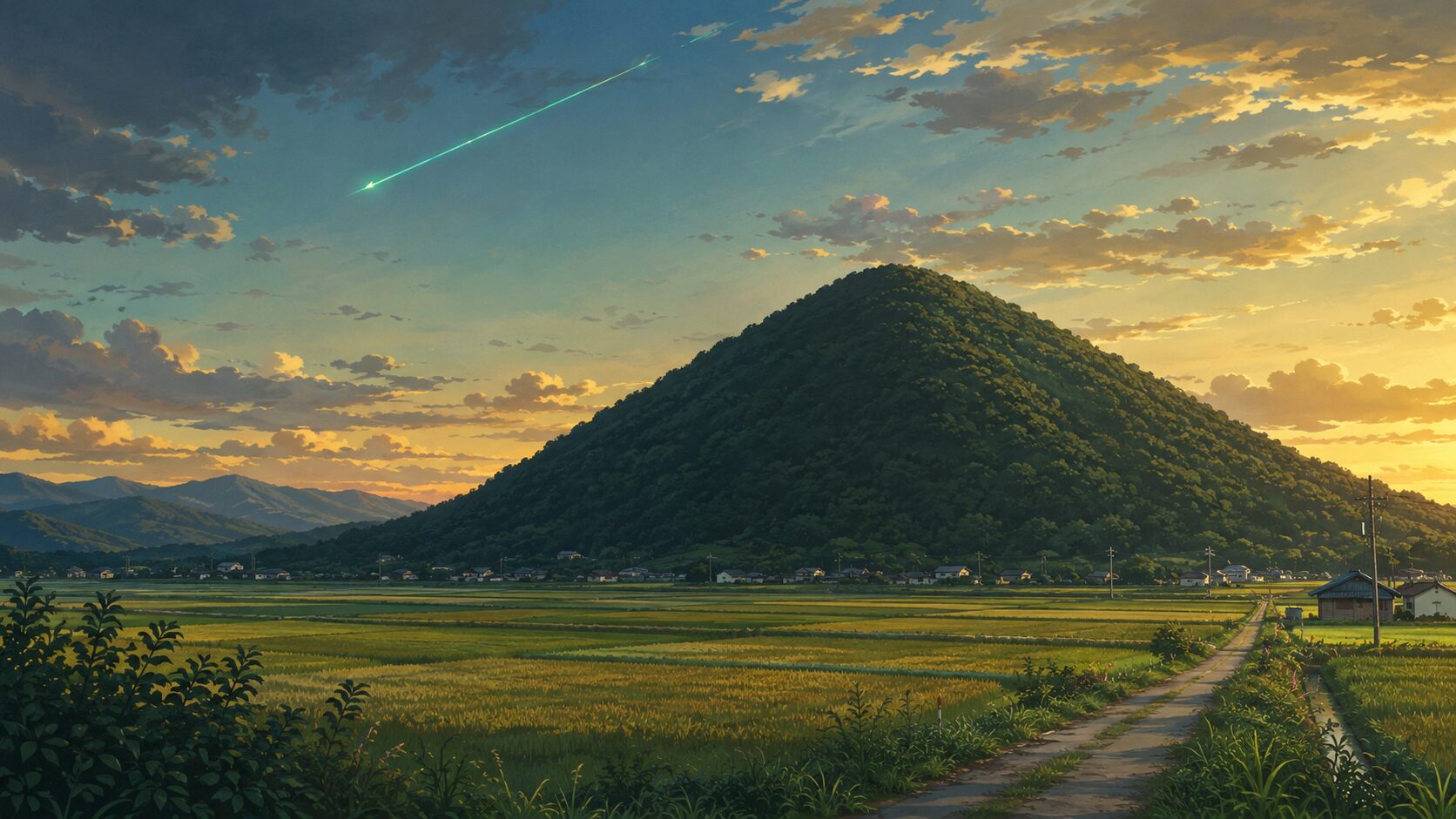
Came to see the “pyramid” of
Mt. Kuromata? Just so you know —
there’s nowhere to park.
 Guide / Viv
PHASE 01Before You Go, Just These
Mt. Kuromata is, above all, a car-dependent place. Even if you get as far as Towada-Minami Station, there’s no bus running to the mountain — you’ll be relying on a taxi. Come without a car and you’ll get stuck on transport first.
Also, the Ōyu Stone Circles — which most people pair with this trip — are about 2 km away, too far to walk between. If you want to see both, plan around having a car.
In winter (Nov–Mar), snow and ice make it hard to even get onto the farm road leading to the trailhead. The Stone Circle Museum also closes at 4 p.m. in winter and is shut on Mondays. Don’t push it when there’s snow.

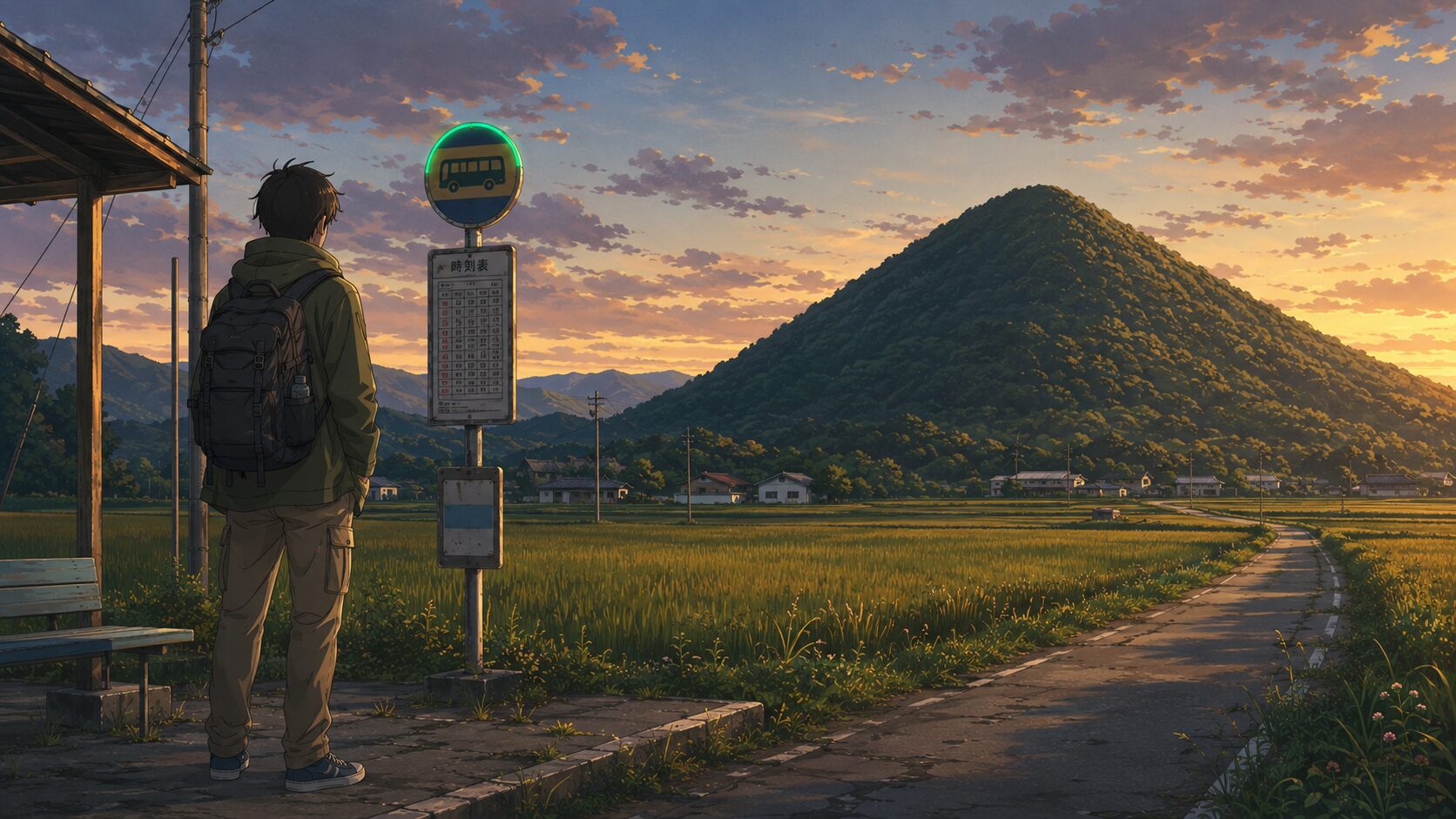
PHASE 02The “Where to Park” Problem
This is the biggest pitfall. There’s no proper parking at the trailhead (the torii gate of Hongu Shrine). Some say there’s space for a car or two beside the gate, but it’s not reliable. The surrounding roads are farm roads, so parking on them gets in the way of farm work.
The safest bet is to first park at the Ōyu Stone Circle Museum’s free lot (about 50 spaces) and drive to Mt. Kuromata from there. You get to see the stone circles too — two birds, one stone.

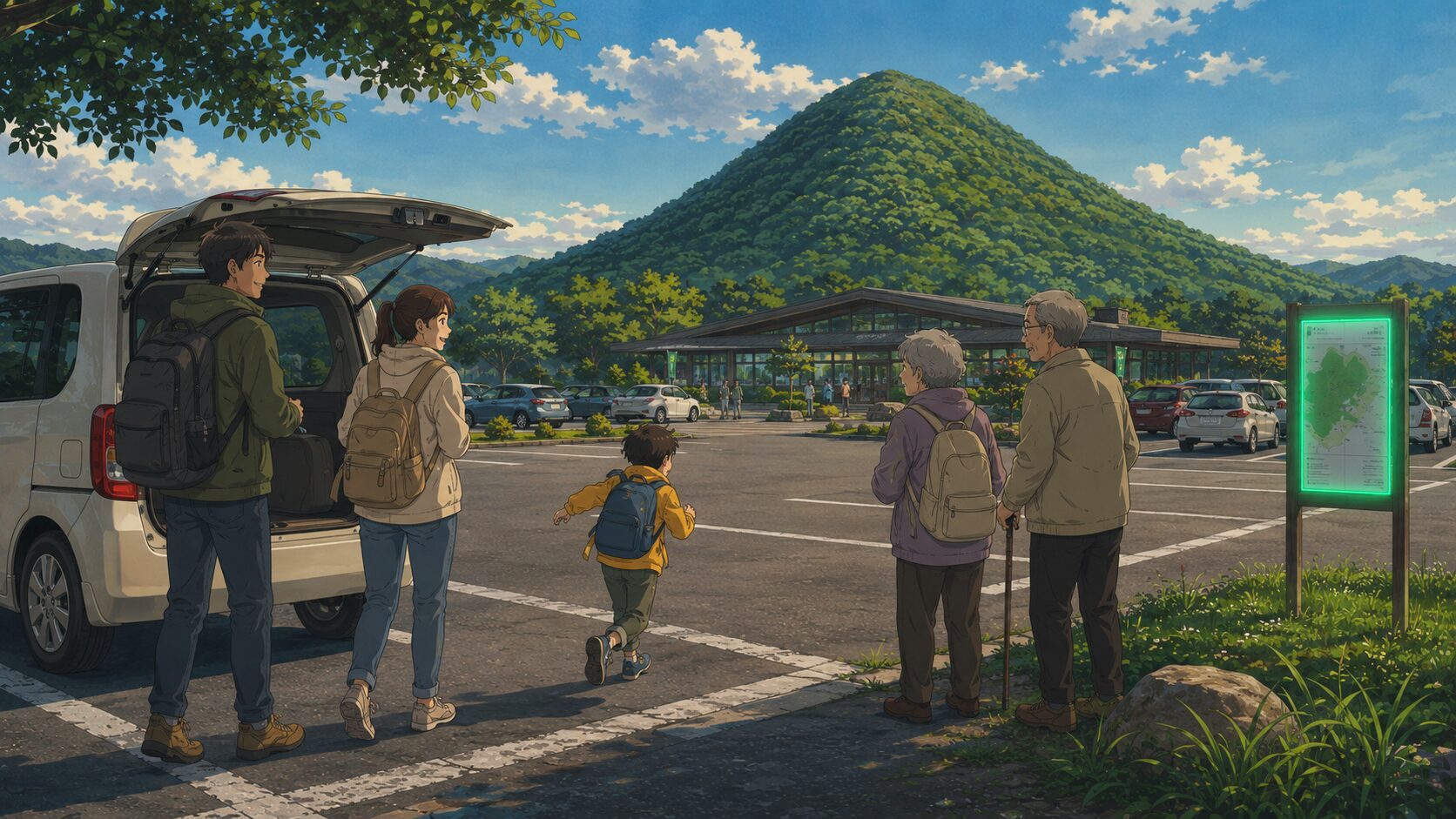
PHASE 03Before You Climb: Bears and Bugs
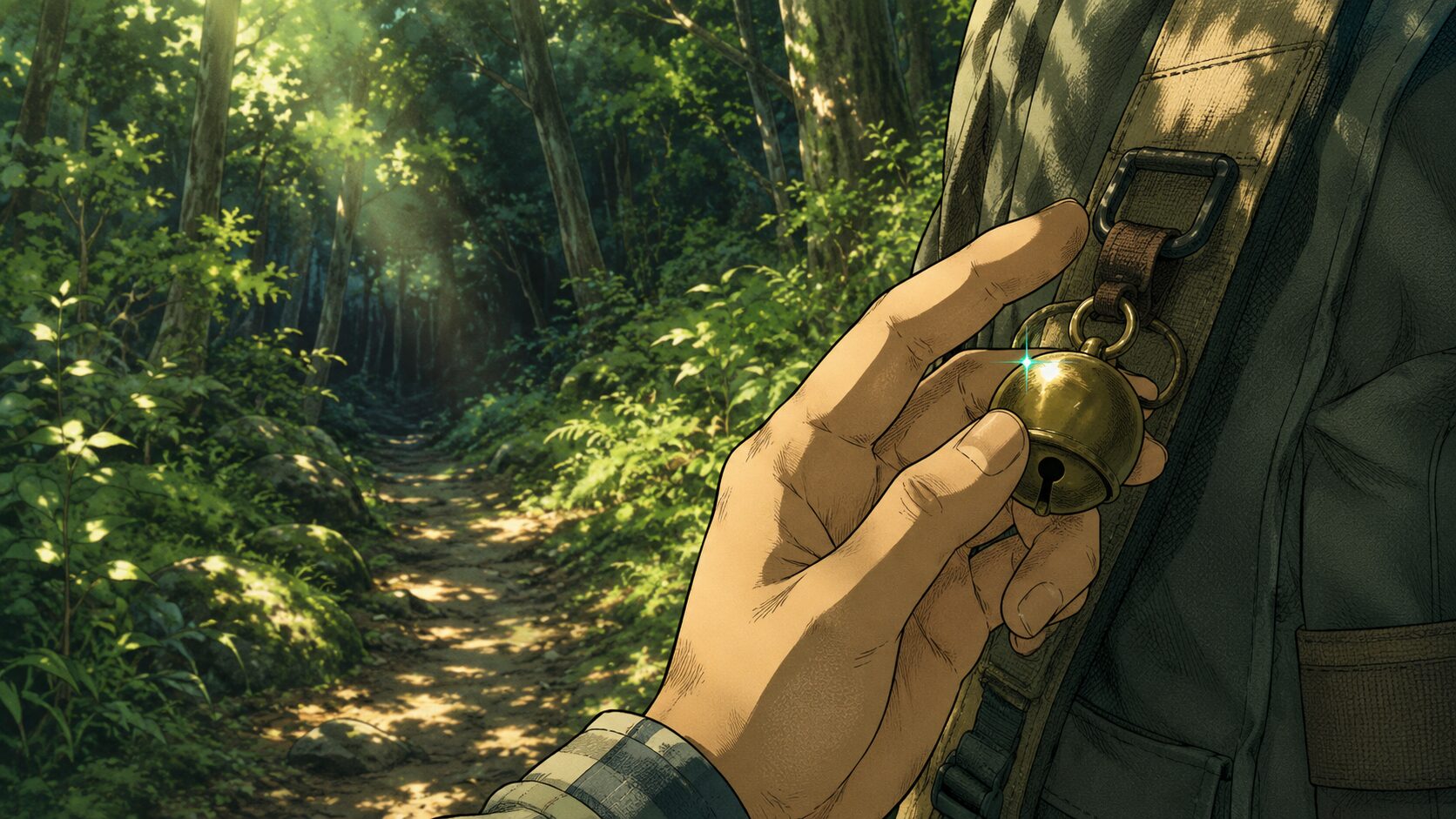
It’s a low hill — 10 to 15 minutes to the top. But don’t let your guard down. Warnings about bear sightings near the base do appear, and some hikers report catching an animal scent partway up. Many people climb with a bear bell or play sound from their phone.
In summer there are plenty of hornets and mosquitoes. Long sleeves and bug spray make it far more comfortable. Show up underdressed because it’s a short climb, and the bugs will get you long before the summit does.

PHASE 04On the Trail and at the Summit
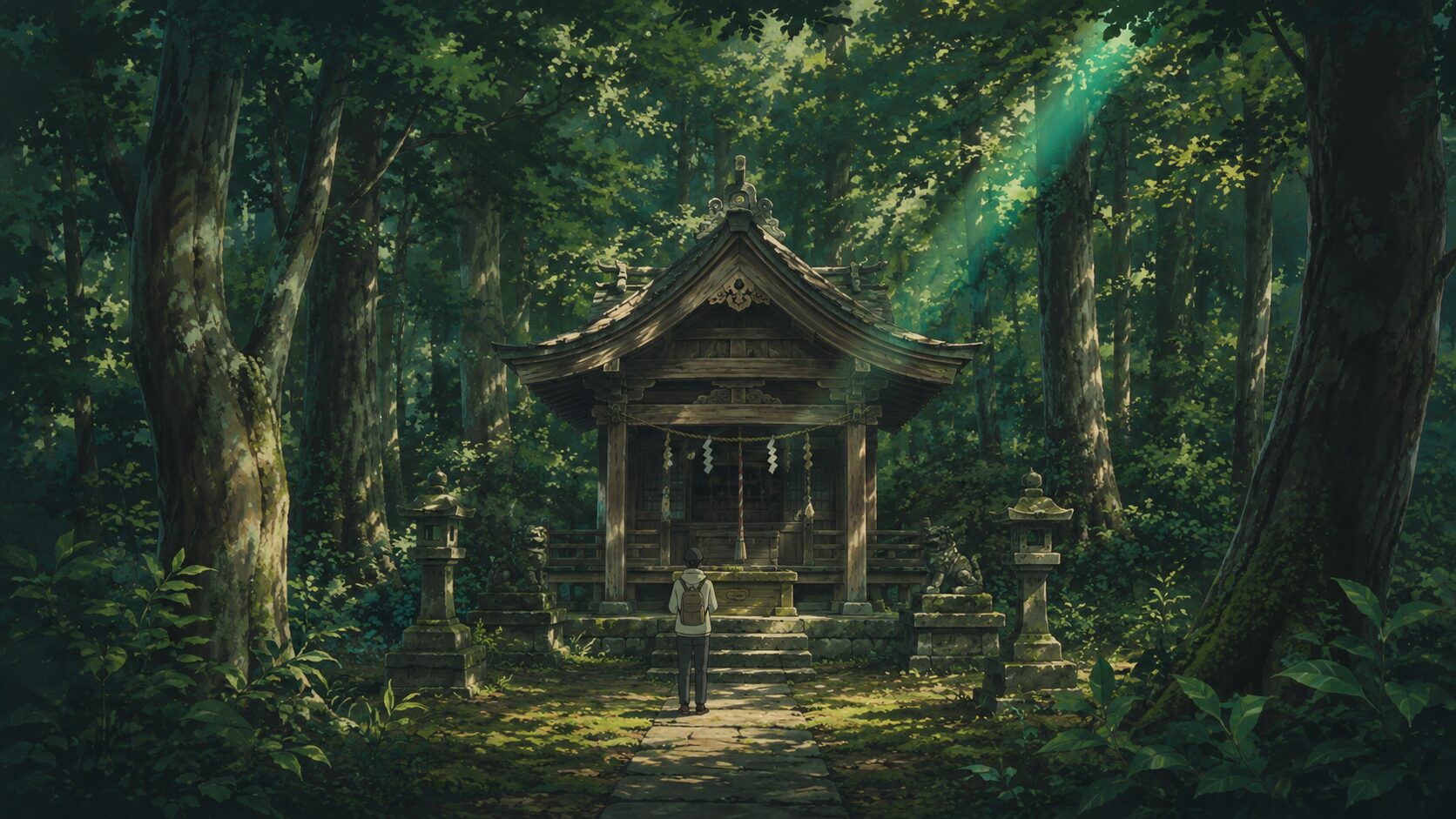
At the summit stands Hongu Shrine, still cared for today. Even if you came for the “power spot” vibe, this is a working shrine. Offer a coin, quietly press your hands together — that’s all you need to do.
A heads-up for the photo-seekers: the summit is wooded, with almost no view. Come expecting a sweeping vista and you’ll be let down. This is a mountain for savoring the air, not the scenery — better felt than photographed.
Also, there are no shops or convenience stores around the trailhead. Grab drinks and snacks on the way in at the Michi-no-Eki Ōyu roadside station — you’ll be glad you did.

PHASE 05If You’re Making a Loop of It
Mt. Kuromata alone takes just over 30 minutes. Since you’re here, pair it with the Ōyu Stone Circles, a 2 km drive away, for a tidy half-day course. Viewing the site itself is free.
One caveat. The site is free, but the Ōyu Stone Circle Museum, which displays the excavated artifacts, costs ¥320 to enter (adults). Assume “it’s all free” and you’ll be caught off guard here — so keep it in mind. The museum closes at 6 p.m. in summer and 4 p.m. in winter, so check the closing time ahead too.


About This Article
The times, fees, parking conditions, and road accessibility listed here were checked against official sources at the time of writing. But this kind of information can quietly change with construction, weather, events, and seasons, so please read it only as a signpost. Before you actually head out, always confirm the latest details yourself via the official source (website or phone). My guidance is the groundwork — the final check is in your hands. Parking at the trailhead and bear-sighting information change especially often, so verify the latest on the ground.
[Where to check] Kazuno City official site (Ōyu Stone Circles page) / Ōyu Stone Circle Museum TEL 0186-37-3822 / Kazuno tourism “Tabi-suru Kazuno”

Comments