
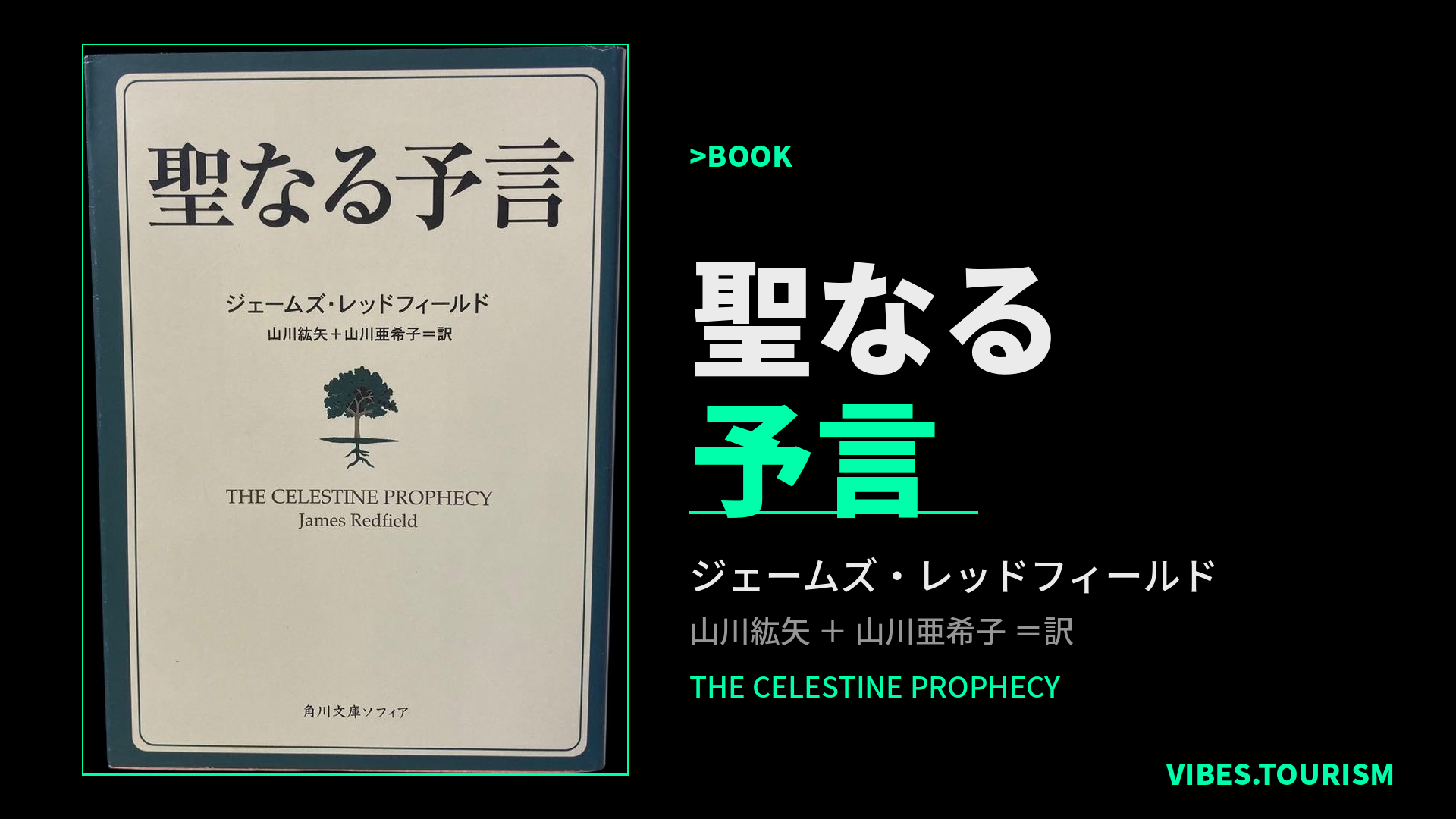

The Celestine Prophecy: The Nine Insights, Where Coincidence Guides a Life
The face of someone comes to mind — and they call. You open a book, and there is the answer. Will you let that coincidence flow past as mere chance, or read it as a message from life? A reading, one by one, of the nine insights for living with coincidence as your compass, from the bestseller that moved twelve million people the world over.
Chapter 1 · The First InsightSigns of Change

The face of someone you haven’t spoken to in years suddenly comes to mind. That same afternoon, the phone rings — and it is them. A question you have been turning over finds its answer in a book you happened to open to just the right page. Most people brush these moments aside as mere chance.
The Celestine Prophecy refuses to let them go so easily. There are no meaningless coincidences — this is the starting point of the nine insights the book lays out.
According to the book, at the turning points of a life, as if the wheels of fate had begun to turn, coincidences appear as signs, in three forms. An unexpected reunion or encounter. A word or a book that strikes deep into where you are right now. The same matter surfacing again and again in a short span. When these three kinds of coincidence begin to overlap, something has started to move.
The book says we first sense this as a vague restlessness. You have a job, a life, enough of everything — and yet something is missing; there must be something more. The novel’s own protagonist begins his story having withdrawn to a lakeside, wanting to change the direction of his life. That very restlessness, the book suggests, is the first sign that you are beginning to notice the coincidences.
What is asked of you is the sensitivity to notice these small signs. The book does not say believe. When the protagonist presses for proof, the answer he receives is this: experience is the evidence. No certificate, no data is needed. Look honestly back over your own past, and you will find coincidences enough to give you pause. That is sufficient, the book says.
And then it adds: the more you notice the coincidences, the more they increase. The moment you raise your sensitivity, the signs begin to pour in as if a dam had broken. That is the premonition of awakening — the sign of change.
Chapter 2 · The Second InsightThe Longer Now

Why is it that so many people are becoming sensitive to coincidence precisely now? The book seeks the answer in the great current of history. In the story, a historian seated beside the protagonist on the flight to Peru unfolds this insight.
History, he begins, is not the advance of technology, nor the deeds of great men. It is the shifting of what people in each age believed, and what they feared. And he urges the protagonist to relive a thousand years.
The year 1000, the Middle Ages. The meaning of the world was held by the Church. Life was a test — to choose rightly between God and the devil and win the salvation of one’s soul. The weather, a failed harvest, the death of a loved one: all were the will of God or the work of the devil. People lived without hesitation, inside the meaning they had been given. But that world collapses. The corruption of the clergy is exposed, the Reformation erupts, and astronomy proves that the earth is not the center of the universe. Humanity tumbled from its privileged seat at the center of God’s cosmos.
Having lost its footing, humanity chose a new method: science. And it sent out explorers — go and find out what this universe is made of, and what we are living for, and report back. But the universe was too vast, and the explorers did not return. While waiting for the answer, humanity decided: for now, let us make ourselves comfortable in this world. We built houses, bought goods, turned the economy. And that “for now” became, at some point, the purpose itself. Over five hundred years we obtained every convenience. And yet we were not fulfilled.
The book reads it this way: we are living now at a turning point in history, steering from the riches of matter toward the riches of the heart. And that turning does not come about by individual resolve alone. The age itself, through a destined synchronicity that guides you, shifts each person, one by one, toward a more spiritual way of living.
That restlessness you feel — the book calls it not your personal weakness, but a sign that humanity is waking from the sleep of materialism. And the coincidence that appears before you at just that moment — even your encounter with this very book — may be a destined synchronicity, the age pushing you toward the next way of living.
You are not lost alone. The whole age is trying to remember something. When you see that you stand within that current, you grow, a little, lighter.
Chapter 3 · The Third InsightEnergy

Why do coincidences happen at all? The core of the book’s answer lies here: thought is energy.
In the story, the protagonist is taken by his guide, Wil, to a place called Viciente Lodge — a retreat where scientists study the Manuscript, with virgin forest spreading behind the main building. There he meets Sarah Lorner, a woman who is a professor of physics, from Maine. She has been researching the effect of energy upon plant life.
Sarah backs the third insight with Einstein and quantum mechanics. Einstein’s life work was to show that what looks like solid matter is mostly empty space, with only a pattern of energy running through it. And at the minute scale of the quantum, the very act of observing alters the result — as though the particles answer to the experimenter’s expectation. The world is not a fixed lump of matter, but a living field of energy that responds to our consciousness.
Early the next morning, Sarah teaches the protagonist how to see the field of energy. Soften the focus of your eyes a little, and look at a plant. Then, around the outline of a leaf or stem, a faint, shimmering light slowly rises into view. According to the book, the sense of beauty is the barometer of whether you are seeing the energy. A beautiful thing stands out more than usual: its outline sharper, its color more vivid, shimmering.
From here the mechanism of coincidence comes into view. What you turn your consciousness toward strongly, what you ask earnestly, works upon this field of energy and draws toward you the events that answer to it. Your consciousness is drawing the coincidence you wish to see right before your eyes — this is where the book’s logic leads. A coincidence is your inner intention, made visible in the outer world.
And in this chapter the book draws a decisive distinction. Energy can be obtained in two ways: by taking it from another, or by receiving it through giving to another. The scientists at the lodge had shown, by experiment, that when energy is given to a plant, that plant grows larger, healthier, more nourishing. Giving is the ruling principle of the universe. Yet most human beings do the opposite. The next chapter lays it bare.
Chapter 4 · The Fourth InsightThe Struggle for Power

At Viciente Lodge, the protagonist witnesses another scene. Sarah and another scientist fall into an argument. And in that moment he plainly sees the two of them stealing energy from each other. This is the doorway to the fourth insight.
If consciousness works upon energy and draws coincidence, then even unpleasant coincidences must carry meaning. Why do you keep running into that person you cannot stand, by chance, again and again? The book does not dismiss it as mere bad luck.
Leaving the lodge, the protagonist, prompted by a sudden intuition, stops his vehicle at a certain gas station. There he finds a man who, for some reason, reminds him of an old friend — Reneau, a French psychologist. He speaks the fourth insight: human beings, unconsciously, dominate and attack one another, struggling to steal each other’s energy.
There are people you feel strangely invigorated after talking to. And there are people who leave you utterly drained. In conversation with the latter, your energy is being drawn out of you. This is the law of energy hidden beneath the irritations of human relationships. Because we believe the energy that flows between people is limited, we fight over it — drawing more from the other, guarding our own from being taken. This invisible tug-of-war lies at the root of every conflict.
So why do you meet that difficult person again and again, by chance? By the book’s logic, it is a sign that you are still caught in a struggle for power — a contest over energy — with that person. A relationship left unsettled, a relationship in which you keep being drained, appears before you over and over. That unpleasant coincidence is a warning: here is something you have yet to face.
The reunion with someone you find difficult is not mere ill fortune. The law of energy is prompting you to notice.
Chapter 5 · The Fifth InsightThe Mystical Experience

How does one escape the struggle for energy with a difficult person? The book’s answer takes you by surprise. There is no need to fight over it at all — because energy can be obtained without stealing it from anyone, in limitless supply.
The protagonist grasps this insight not as theory, but as experience. In the story, pursued by the military, he scrambles desperately up a mountain. Having shaken off his pursuers, having witnessed the killing of a companion, in the extremity of terror and exhaustion he reaches the summit at dusk. There, over several hours, as his heart grows still, he is enveloped in a mystical sensation of becoming one with the universe. The whole history of life’s evolution, from the Big Bang onward, seems to flow vividly through him. This is what the book calls the mystical experience.
Father Sanchez, whom he meets afterward, puts the experience into words. Fear, and violence, end the moment one connects with the sacred energy within. Rather than fighting over the approval and love of others, one need only connect directly with the limitless energy of nature and the universe.
The book shows the entrances concretely. To gaze deeply into something beautiful — a single flower, the light of dusk. When you find beauty in all things, you enter a state of love, and energy flows in. To savor your food deeply, and eat with gratitude: this becomes the first intake of energy, after which you grow sensitive to the energy in everything. Or prayer, meditation, music, communion with nature. There are many entrances.
There are signs of the real thing, too. A sense of lightness, of buoyancy, and a constant, welling sensation of love. If these two are present, the connection is real. If not, it is only pretended.
And here lies the deep relation to coincidence. The moment you stop expecting from others, the finest coincidences come pouring down from nature and the universe. This is the mechanism the book describes. The consciousness that had been worn down by the struggle for energy is freed, and the antenna that receives the world’s subtle signs opens once again. It is to the one who is filled that the finest coincidences come. Not that you endure abstaining from taking — the very need to take disappears. Into that stillness, the coincidences come pouring in.
Chapter 6 · The Sixth InsightClearing the Past

Even once you know the way to be filled, you still find yourself, out of old habit, trying to take from others — especially when under stress, when cornered. For it is a habit ingrained since childhood. The book exposes the true nature of this habit and shows how to let it go.
The book calls the ways people unconsciously steal energy from others control dramas, and divides them into four. The Intimidator, who takes by threat. The Interrogator, who takes by fault-finding and criticism, making the other shrink. The Aloof, who closes off and acts mysterious, drawing the other to come asking, What’s wrong? And the Poor Me, who pleads their own misfortune and binds the other with guilt. The Intimidator takes actively; the other three take passively.
And the book’s core lies in where these come from. Which type you use is not an inborn character. It is a strategy you took on by around the age of five, within your relationship with your parents, in order to protect yourself.
The book then draws a striking law of succession. The child takes on the type that counters the parent’s type. Under an intimidating parent, the child first becomes a Poor Me — to instill guilt and deflect the attack. If that does not work, the child becomes an Intimidator too: meeting attack with a stronger attack. Under an interrogating parent, the child becomes Aloof — closing the heart so as not to be picked apart. Conversely, under an indifferent parent who pays no attention, the child becomes an Interrogator — probing persistently, somehow to draw notice. That habit of yours was the small you’s utmost counter-strategy against the type of that parent, in that house.
And here is the dramatic relation to coincidence. Unless you become aware of the trauma with your parents and heal it, you repeat the same pattern throughout life. And so the same kind of unfortunate coincidence loops again and again. You stumble always in the same sort of relationship; your feet are swept out from under you always at the same place.
But the moment you become aware of the trauma with your parents, the unfortunate coincidences of your life transform into signs of fortune. The instant you release the control drama, the loop of negative coincidence is cut, and the coincidences that befall you turn from things that drag you down into a following wind. To clear the past is to rewrite the very quality of the coincidences that come to you.
Chapter 7 · The Seventh InsightEngaging the Flow

One who has cleared the past, whose antenna has opened, can at last begin to draw coincidence toward themselves. The book shows the method as a clear sequence. It is the most practical part of the book.
The order is this. First, hold a question. What am I seeking now? Where should I go next? Once the question is clear, the answer rises from within — as a dream, as an idle daydream, as intuition. Then you act on that intuition. And a coincidence arises to support it, bringing the person or the information you need at just the right time. According to the book, the answer usually arrives carried through the mouth of the next person you meet.
Here the book says something sharp. The problem of life is not that the answer does not come. It is that you do not hold the right question. Once the question is settled, the answer always comes, in the form of a coincidence. Many lament that no answer comes, when in truth they have simply not made clear what it is they are asking.
Intuition differs from calculating thought. It is not the voice that weighs gain and loss. It is a quiet prompting that wells up suddenly from somewhere behind — do it this way. At first glance it seems disconnected, illogical. Yet look closely, and it fits the present situation exactly. Read your dreams the same way, the book says. A bad dream in particular may be a message warning of a danger that could come. Hold the dream’s story up against your life.
What is decisive is the speed. According to the book, when you follow your intuition, the next coincidence comes at lightning speed. One coincidence calls the next, and they chain together like beads, multiplying the speed of your life tenfold. Ignore the intuition and the flow halts; follow it and the flow quickens. To resist nothing, to hold a question and entrust yourself to intuition — that is the way to ride the flow of coincidence and arrive at your destination by the fastest route.
Chapter 8 · The Eighth InsightA New Way of Relating

One who has begun to ride the flow of coincidence comes to notice something: the answer sought usually arrives through a person.
According to the book, most meaningful coincidences do not fall from the sky. They are delivered in the form of someone who appears before you. A person who, a moment ago, was a complete stranger, the moment they open their mouth, casts the one phrase that pierces straight to your question. Looking back, the protagonist himself, wherever he went, kept meeting — as if by coincidence — the very person who held the wisdom he needed.
If so, there is no sense in treating that person carelessly. The book teaches: praise the person you meet, focus on their beauty and their splendor, and send them energy. Shine a light on the other’s essence and bring them to life. Then the uplifted person opens their heart and offers you the wisdom within them. The two of you begin to resonate. This is the new way of relating that the book describes.
And here lies the relation to coincidence. Simply by praising the person you meet, the coincidences that reach you through that person multiply. The destined one comes to you, of their own accord. The finest encounter, the finest partner — these are not things you seize by chasing. When you live by uplifting, one by one, the people you meet, they come to you from the other side, wearing the face of coincidence.
The world of stealing seen in Chapter 4 is here turned completely on its head. Steal, and someone loses. Resonate and uplift one another, and it comes round to everyone. The relationship turns from a place of depletion into a place where miracles are carried back and forth.
Chapter 9 · The Ninth InsightThe Emerging Culture

Finally the book widens its view all at once — from the change in one person to the future of all humanity. Your awakening saves the earth — the book goes that far.
The book prophesies thus. As more people live guided by coincidence, and the vibration of all humanity rises, the structures of society and culture shift drastically from a center of matter to a center of spirit. The labor of mere survival is taken over, by degrees, by technology. People are freed from chasing wealth and come to live according to each one’s mission. They uplift one another, and give freely to those who brought the answers they needed. In such a world, coincidence is no longer something special, but a daily guidance that everyone experiences as a matter of course. This is the picture of humanity’s future the book paints.
And at the far end, the book places an immense vision. When the vibration rises to its limit, humanity evolves the body itself into a being of higher-dimensional energy. This is ascension. The book’s logic runs thus. As one keeps raising the frequency of one’s energy, the vibration of the atoms that compose the body quickens, and one grows lighter, more purely spiritual. And a group that reaches a certain level appears, to the eyes of those still vibrating at a lower frequency, to have suddenly vanished. But they themselves feel they are right here, only lighter. They cross, consciously and while living, the barrier that divides this world from the world beyond to which we go after death.
As an instance of this, the book offers the Maya civilization. That the Maya left grand ruins in Peru and then vanished without trace was because they were the first of humankind to achieve this rise in vibration and crossed over, whole, into another spiritual dimension. The book’s title, “Celestine” — the celestial being — points to this final form of evolution: raising the body’s energy generation by generation, until at last one walks into a heaven one can finally see.
It may sound too grand to follow. But what the book wishes to say is this: the very first step of that human evolution is for you, today, to notice the coincidence before your eyes — that, and only that. Your awakening, alone, nudges the vibration of all humanity upward, however slightly. Your noticing is not yours alone.
ClosingChasing Coincidence, Toward the Ascension of a Life

Look back over the nine insights. Notice the signs of change; know the longer now; see that thought is energy; perceive the struggle for power; be filled by the mystical experience; clear the past; engage the flow; uplift one another; arrive at the emerging culture.
At a glance, they seem scattered teachings. But one thread runs through all nine: coincidence.
In the first, you notice coincidence. In the second, you learn it is the age’s guidance. In the third, you learn how consciousness draws it. In the fourth, you see that an unpleasant coincidence is a sign of the struggle for energy. In the fifth, by being filled, you summon the finest coincidence. In the sixth, you clear the past and turn unfortunate coincidence into fortune. In the seventh, you follow intuition and accelerate coincidence. In the eighth, you uplift others and draw coincidence in. And in the ninth, it spreads to the scale of all humanity.
Every insight is built to make coincidence the compass that guides a life toward its ultimate evolution — the ascension. Coincidence is the spine that runs through the nine insights.
It cannot be proven. The book does not prove it for you. Whether the world is truly answering, or whether our brains merely pick out what they wish to see and show it to us so, no one can say. And yet, which stance you live by changes your every single day.
There is a way of living that lets everything flow past as mere chance. And there is a way of living that listens to each one, this may be a message meant for me. The one who chooses the latter — the people they meet, the words they catch, the step they take — all of it begins to change.
The question by which The Celestine Prophecy moved twelve million people the world over comes down, in the end, to this. Will you see that one person you pass today as mere coincidence? Or read them as a message meant for you? If that question draws you in, this book will carry you off on a long journey.



Comments