

A Buddhism That
Never Says
“Throw Away Desire”
MIKKYO — ESOTERIC BUDDHISM, REREAD FROM 2026
A teaching was born in India and vanished in India. It lives now only on a mountaintop in Japan and deep in a Himalayan valley. Its true nature was revealed—in the most rigorous paperback imprint there is—by a man who walked both surviving sites on his own feet. A book still in print 35 years on, reread here from 2026.
SCROLL ▼

A teaching was born in India and vanished in India. It lives now only on a mountaintop in Japan and deep in a Himalayan valley. And its content is extraordinarily dangerous—for a Buddhism, it does not say “throw away desire.”
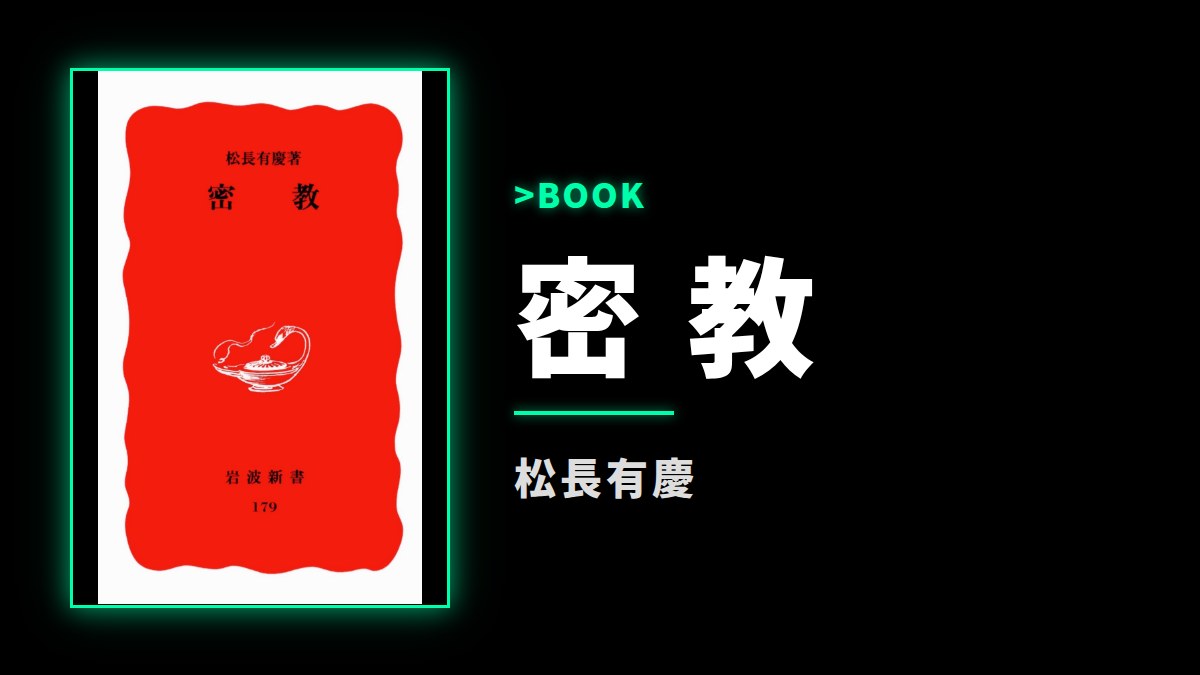
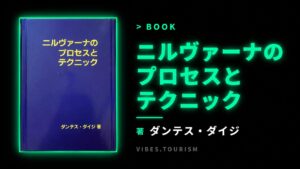
The true nature of that teaching was revealed, in the most rigorous of places—an Iwanami paperback—by a man who walked both of the surviving sites on his own feet: this book, Mikkyo. Published 1991, still in service. Here we reread its content from 2026, from our position—knowing the “afterward” the book does not yet know: the author’s fate, and the incident that would come four years later.
In the small hours of April 16, 2023, at 1:58 a.m., the head temple of Koyasan Shingon Buddhism, Kongobu-ji, announced the passing of its 412th abbot. Yukei Matsunaga, age 93. He was the first person in the roughly 1,200-year history of that mountain to hold its summit for two full terms—eight years.
The career listed in his obituary does not fit neatly inside the religious world. President of the Japan Buddhist Federation. In 2009, a meeting with the exiled 14th Dalai Lama. The following year, 2010, attendance at the World Economic Forum in Davos at the age of 80. It was during his tenure that, for the first time in the mountain’s roughly 1,200 years, the head of the Tendai sect was welcomed to a memorial service for Kukai’s birth. Two sects whose founders had passed each other by for over a thousand years—Saicho and Kukai—had their leaders face one another officially for the first time.
One of Matsunaga’s representative works is a slim Iwanami paperback—this book, Mikkyo (Esoteric Buddhism). He wrote it at the age of 61, when his title was still merely “leading scholar of esoteric Buddhism.” Since then it has gone through more than thirty printings, and 35 years after publication it remains on bookstore shelves.
Trace the career backward and you can see what gives the book its strong legs.
In 1929, Yukei Matsunaga was born on top of Mount Koya. His family home was Nan-in, a temple within the mountain complex; his father was both its head priest and a professor at Koyasan University. At 800 meters’ elevation, the very heart of a mountain that had done nothing but esoteric Buddhism for over a thousand years since Kukai opened it—that was, quite literally, his first bath. In 1941, while still a boy, he shaved his head and entered the path of a monk.
Up to here, it is the story of “the heir of the mountain.” What came next was different.
The young Matsunaga came down from the mountain and went to graduate school at Tohoku University. His field was Indology and Buddhist history—a discipline that dissects Buddhism not as faith but through texts and historical fact. In other words, a man born and raised in the home ground of esoteric Buddhism deliberately went to fetch a measuring stick from outside faith, and used it to re-measure the ground beneath his own feet. From 1977, moreover, he led the Koyasan University Ladakh-Zanskar Buddhist Cultural Survey deep into the Himalayas. The texts of the study, and the field at several thousand meters. The inside of faith, and the outside of scholarship. A scholar of esoteric Buddhism who walked all of it on his own feet was rare then, and is rare now.
The word “esoteric Buddhism” drags along certain images—the goma fire, mysterious incantations, secret rites; something faintly suspect and hard to approach. That esoteric Buddhism was written about, for ordinary readers, by a man who would later sit in the most rigorous chair in the esoteric world, under the most rigorous paperback imprint in Japan. That is what this book is.
And yet the author never once puts on airs within its pages. The person writing this book in 1991 is not an abbot or a federation president, but a 61-year-old scholar back from the Himalayas. A man born on the mountain, who learned the measuring stick from outside the mountain, and who saw the teaching where it still lives—opening the doors of a thousand-year storehouse for first-time readers. Why such a guided tour was even possible for a “secret” teaching: the answer was built into the very way those doors open, a thousand years ago.
April 16, 2023, 1:58 a.m. The 412th in line returned to the mountain where he was born.
Koyasan, before dawnThe dying master did not pass it on by book. For half a year, he met him every single day.
Chang’an, early summer 805In the early summer of 805, in the Tang capital of Chang’an, deep inside a temple called Qinglong-si, an old monk lay ill. His name was Huiguo (Keika). He had bestowed initiation upon three emperors—Daizong, Dezong, Shunzong—the legitimate heir to esoteric Buddhism standing at the summit of the empire. Two streams of teaching had come separately out of India, the Womb realm and the Diamond realm. The man who had inherited both in a single body was, in that age, Huiguo and Huiguo alone.
Into that room a 31-year-old foreigner was shown. An unknown student-monk from Japan. His ship had been blown off course by a storm, washed up at a southern port utterly unlike the one planned, and he had even been suspected of being a stowaway—at the end of such a wretched journey, the man had reached Chang’an. His name was Kukai.
To Kukai, on their very first meeting, Huiguo said: I knew you were coming; I have waited a long time. Kukai himself wrote this down in the official report he later submitted to the court, the Shorai Mokuroku. To dismiss it as a pleasantry, the half year that followed is far too strange.
The next month, in June, Kukai received the Womb-realm initiation. In July, the Diamond-realm initiation. In August, finally, the initiation of acharya transmission—the qualification to stand on the side that bestows the teaching. A staircase that Tang disciples climbed over years, some over decades, this newly arrived foreigner ascended in three months. In the rite where one throws a flower onto the mandala while blindfolded, Kukai’s flower landed both times upon the central Mahavairocana, the same report records.
What Huiguo handed over was not only qualification. Scriptures: 216 titles in 461 scrolls. The images of both mandalas. Ritual implements passed down from master to master. The list of objects alone was a national-treasure-scale migration for the Japan of that day.
Here is one strange point. While handing over all those “objects,” Huiguo went on meeting Kukai nearly every day. For a teaching that books and tools could complete, a dying old man had no need to spend his strength meeting in person.
That December, Huiguo entered nirvana. Only half a year after meeting Kukai. For the funeral, the great role of writing the memorial inscription—passing over the ranks of disciples gathered from across Tang—was given to the foreigner who had arrived half a year earlier: Kukai. The master’s final instruction was brief. Return to Japan as quickly as possible and spread this teaching across the land.
Kukai obeyed. The study period ordered by the court was 20 years. He cut it short and returned in two. A student who broke his term on his own authority was, by rights, subject to punishment. Knowing the risk of being charged, Kukai boarded the ship. The old master’s urgency had become, exactly, the disciple’s urgency.
What Huiguo was in such a hurry about, no one at the time—probably not even Kukai—could fully see. The answer came 40 years later. In 845, the great persecution under Emperor Wuzong of Tang—the Huichang suppression of Buddhism. Buddhism in Chang’an was dealt a devastating blow, and esoteric Buddhism, which had fed on imperial protection, tumbled down the slope in its home ground of China.
The old man on his deathbed did not misjudge the lifespan of his teaching. Those three months that summer were not a transmission. They were an evacuation.

A scripture that declares even sexual love “originally pure” is read aloud every morning.
The fire, handed overEvery morning, in Shingon temples across Japan, one scripture is read aloud. The Rishukyo. A scripture in regular use at the core of the teaching Kukai brought back, chanted at funerals and memorials alike—the sect’s standard number, you might say.
Learn what is inside it, and most people doubt their ears.
Its famous passage, the Seventeen Purities, takes up human desires one by one and declares of each—it is, originally, pure. It makes no exception even of the moment of sexual love between man and woman. In the history of Buddhism, which has cut desire off as the root of suffering, this is very nearly an incident. At the core of the teaching the dying Huiguo entrusted to Kukai, this bomb was packed.
In the book’s fifth chapter stands a heading summarizing the idea: “The Affirmation of Desire.” Esoteric Buddhism treats the passions not as “dust to be swept away” but as energy with a use—the urge to eat, to live, to connect, to be recognized. That urge does not well up because one’s practice is lacking; it is an unquenchable fire that keeps erupting as long as there is life. Where much of traditional Buddhism tried to extinguish this fire, esoteric Buddhism changed the verdict. A fire that won’t go out—use it.
That said, this is not a license to burn as you please. In the world of the Rishukyo there is the word “great desire” (taiyoku). Raise the small desire that begins and ends in satisfying yourself into the vast desire to save every living being. Don’t cut the engine—turn the wheel. What esoteric Buddhism affirms is a desire whose output has been redirected.
This idea, esoteric Buddhism did not hold in words alone. It is built, in visible form, into its most famous scene. The goma fire—that fire rite in which the practitioner keeps feeding sticks into a blazing hearth. By the conventions of the iconography, the sticks are the passions, the flame is wisdom. The goma, then, is a public demonstration of not hiding or discarding the passions, but bringing them out before all eyes and converting them into the firepower of wisdom. The more passions a person has, the more sticks; the more sticks, the larger the fire. That desire you are right now holding unspent in your chest—by this classification, it is firewood.
The treatment of the fruits of practice (siddhi) is consistent as well. According to the book, worldly benefits—illness healed, a livelihood secured—and formless awakening: esoteric Buddhism does not cut these two off by rank. Because what you should hold out first to a starving person is not the philosophy of emptiness, but bread.
That the affirmation of desire can become a doorway to runaway corruption is proven by esoteric Buddhism’s own internal history. In medieval Japan there appeared a lineage, the Tachikawa-ryu, said to have connected this kind of teaching directly to sexual rites, and it was thoroughly suppressed as a heresy. Recent scholarship includes voices pointing to later exaggeration and false accusation; but at the very least, a history in which the two characters for “pure” were read conveniently does exist. The rightness of the fire does not guarantee the rightness of how it is burned.

The top of the Buddhist world bowed his head to a younger man. Years later, a single book tore them apart.
A snowy veranda, Heian JapanIn the eleventh month of 812, at Takaosan-ji on the outskirts of Kyoto, a high monk was bowing his head before a man seven years his junior.
The one who bowed was named Saicho. Founder of Japanese Tendai Buddhism and holder of Emperor Kanmu’s full trust, he stood at the summit of the Buddhist world of his day. He had crossed to Tang in the same embassy as Kukai, returned a step ahead, and built a great base on Mount Hiei. That Saicho saw, faster and more accurately than anyone, the value of what the long-unknown Kukai had brought back. Esoteric Buddhism was the newest Buddhism, and his own Tendai lacked it.
For a person who holds pride, no judgment is harder than this. Saicho made it. He received initiation from the younger Kukai and, in form, stood on the side of the disciple. The foremost figure in the Buddhist world, no less.
This beautiful relationship broke in a few years.
Saicho was a busy man. The management of Mount Hiei, negotiations with the court, disputes with the Nara sects. To carve out time to study esoteric Buddhism, he chose a rational method. Borrow texts and learn from books—the standard study method for the Buddhist elite of the day, and indeed Kukai lent him many scriptures.
Then Saicho asked for one particular volume. The Rishushakukyo. The commentary on that scripture of desire from the previous chapter—the Rishukyo.
Kukai refused.
The thrust of his reply was consistent. Esoteric Buddhism cannot be transmitted through an exchange of writing. Master and disciple face one another and hand it over with the whole body. If you wish to learn, then not by book—come yourself, and learn at my side, taking your time. That Saicho, carrying Mount Hiei on his back, could not do this, Kukai must have known. It was, in effect, a letter of severance. Around the same time, even Taihan, the beloved disciple Saicho had raised with his own hands, moved to Kukai’s side and did not return. The bond between the two geniuses was cut here, and Saicho passed from the world in 822, leaving the completion of esoteric Buddhism as unfinished homework.
You can see Kukai as arrogant. But the title of the book he refused is no coincidence. The Rishukyo is the most dangerous nerve in the entire teaching for misreading—trace it self-taught on the surface of the words alone, and you tumble straight into “the glorification of desire.” You cannot simply mail the blueprint of a powder magazine. Kukai’s refusal was not a matter of temperament; it was the very handling regulation inherited from Huiguo in the second chapter. The same logic by which a dying master would not settle for a list of objects, and met him every day for half a year.
The word “secret transmission” survives around us even now. The kind of thing that, the instant it is set in writing, either degrades or becomes a hazard. The “eso” of esoteric Buddhism did not hide. It merely declined any delivery but hand-to-hand.

Once a century, a heavenly maiden strokes the rock. Three times over—that was Buddhism’s estimate.
Becoming Buddha in this very bodyOnce every hundred years, a heavenly maiden descends from the sky, strokes a colossal boulder once with her thin robe, and goes home. Until the stroked boulder wears down and vanishes entirely—that, finally, is one kalpa. The time Buddhism estimated for “a person to become Buddha” is three of those kalpas stacked together. Repeating rebirth again and again, piling up dizzying practice, someday. In short, it was a sentence of “for you, impossible.” For hundreds of years, that was the going rate of Buddhism.
Against that rate, Kukai writes a book. The title is already a fight—Sokushin Jobutsu Gi: On becoming Buddha in this very body. In this very body. Not in a next life, not in a billion years, but in this very life, becoming Buddha.
In the history of Buddhism, there are not many titles this insolent. Had it been mere bombast, it would not have survived a thousand years. The materials for the defense are all here.
First, the one expounding the teaching in the esoteric scriptures is not the historical Buddha. Mahavairocana—not an individual Buddha, but the name given to the universe itself, stars and light and humans all gathered in. According to the book, the body of this universe is forever speaking in a voiceless voice. The sound of the wind, the flow of the river—they are the teaching the universe is expounding in the present progressive, and scripture is no more than a transcription of a tiny part of it. The textbook is not a closed volume but the world itself, still being written.
Next, the six great elements—earth, water, fire, wind, space, consciousness: solidity, flow, heat, motion, space, mind. Esoteric Buddhism takes these six as the parts list of the world, and sees Buddha and human, stone and water, as made—without exception—of the same parts. This is not a matter confined to scripture. The hand holding this text right now: the water that makes up most of it was a cloud last week, and the sea before that. The material of its cells is yesterday’s rice and vegetables, and rice is soil and sunlight. The hand is a temporary bundle of parts borrowed from the world. The five-ring stone pagoda you see in graveyards—square, circle, triangle, half-moon, jewel—is, from the bottom, earth, water, fire, wind, space. A grave, then, is nothing but a declaration that “the parts have been returned to the world.”
Once you arrive here, becoming Buddha in this very body is no longer an outlandish tale. You and Buddha are the same model, made of the same parts. Not broken, only out of tune. Esoteric practice goes to align the three channels every human is equipped with—body, speech, mind—to the Buddha’s side. Form a mudra with the hands, chant a mantra with the mouth, picture the Buddha in the mind. This practice, called the three secrets, is a tuning of three strings to the frequency of the universe.
However, the book always drives in a nail here. The contemplative methods require the instruction of a master holding the proper qualification of acharya, and self-styled practice is not permitted. Even while noting that classes in the entry-level meditation of ajikan are held in major cities, and the raw detail that serious training on Mount Koya is until age 45, the line “always under a master” never once breaks. The technology for resonating with the universe is not written as a machine you may touch alone.
Whether becoming Buddha in this very body actually occurs cannot be verified from the outside. The experiences of the deep practice are, by rule, not to be spoken of publicly—a structure in which successes cannot be counted and cannot be re-tested. Before the point of believing or rejecting, there is exactly one fact you can confirm: that this teaching has not lowered its sign for a thousand years—”If you wish to know, come by the proper procedure.”

That picture you took for a work of art was a practitioner’s “observation record.”
Standing inside the mandalaA fifteen-minute walk from Kyoto Station, step into the lecture hall of To-ji and your field of vision is transformed. A space where 21 Buddhist statues are arranged in three dimensions around a central Mahavairocana—a mandala in sculpture, conceived by Kukai. You do not stand before a picture. The instant you enter the hall, you are made to stand inside the mandala.
The mandala is usually spoken of as a work of art. A precise image of countless Buddhas arrayed in frames of concentric circles and squares. Exhibited in museums, and in recent years popular in the context of design. A well-made pattern—that is how most people take it.
According to the book, that is not a pattern. It is a record. Deepen the practice of yoga—a meditation that binds breath, posture, and mind into one and overlays oneself onto the Buddha—and before the practitioner’s eyes the figure of the Buddha appears. The mandala, it says, is a picture in which what was thus “seen” has been copied down. The arrangement was not worked out in the head; the seen scene came first, and the picture chased after. So with a mandala, before “is it skillful,” the question is “is it accurate.” Its lineage is not artwork but observation record. As for what is actually experienced in the depths of the practice—that is not sold cheap. A line is quietly drawn: this is not a realm to speak of lightly.
The basic set is two scrolls. The Womb mandala, where compassion spreads radially from the central Mahavairocana, a world like a mother’s womb. The Diamond-realm mandala, showing the structure of an indestructible wisdom hard as a diamond. The result of “seeing” one universe from two angles remains, split into two sheets.
And the tools are not pictures alone. To the eyes, the mandala; to the ears, mantra; to the nose, incense; to the hands, mudra. Instead of telling the teaching in words and logic, it works directly on the five senses. That mantras are deliberately left untranslated is for the same reason. Like the closing of the Heart Sutra, “gyatei, gyatei”—that incantation-like passage left in its original sound—it weighs the working of the sound itself over the understanding of meaning. The design is not to make you read the teaching, but to put it into the body through color and form and sound and motion.
In the Himalayan monasteries of a thousand years ago, and on Mount Koya now, practitioners go on sitting, trying to see the same thing. The next time you stand before a mandala in a museum, the way it looks has probably changed. What is in the frame is not a pattern, but a thousand years’ worth of relay notes on “how it looks,” left by those who went before.

A breach the court could not manage. The one they sent in was not an engineer, but a monk.
The monk who built the damThe embankment had collapsed again. In 821, in Sanuki Province (today’s Kagawa). The Manno Pond, one of Japan’s largest reservoirs, lay breached, and the court’s restoration works had sunk into a quagmire. Build and it crumbles, the laborers flee, the paddies go dry. The court, out of options, sent to the site not a civil engineer but a single monk.
It was Kukai. Sanuki was Kukai’s home. When he arrived, laborers began to gather; with the latest civil-engineering knowledge absorbed in Tang, the method was rebuilt, and the difficult works are said to have come together in only about three months from the start. That pond, which had collapsed again and again, still holds water as a working reservoir 1,200 years later, through later repairs.
Seven years later, in 828, he opened a school in Kyoto called Shugei Shuchi-in. In an age when education was nearly monopolized by the children of the nobility, a private school that opened its gate to commoners regardless of status. The Mount Koya granted to him in 816 was a “non-worldly” training ground at 800 meters, far from human habitation; the To-ji granted in 823 was a base for protecting the state standing in the very center of the Heian capital. The deepest part of the mountain and the very center of the capital—holding the two contradictory bases at once with perfect ease, the praying man was, at the same time, the man of the dam and the school.
This cannot be explained by Kukai’s personal versatility. What the book’s fifth chapter, “From the Individual to the Whole,” shows is the reading: it is exactly as the teaching’s blueprint dictates. Esoteric Buddhism does not sever the sacred from the worldly, and “makes the salvation of beings its precept”—the content of a rule that, broken, costs one the right to be a monk, has become the saving of people itself. Connect it to the great desire of the third chapter and the picture is complete. Having affirmed the desire to save every living being as a “right desire,” to overlook a farmer suffering before your eyes as the water dries up means, doctrinally, a failure of practice. Awakening is not the goal but a midpoint for folding back to the whole.
This social dimension has drawn endless criticism on its shadow side. Esoteric Buddhism, bound to the state through prayer and ritual, has historically been charged with collusion with power and with magical intervention in politics. The line between “saving beings” and “serving power” is, from the outside, always blurred. That the book does not avert its eyes from this social dimension but discusses it head-on is itself evidence that the author knows the criticism through and through.

A temple stormed and burned can be rebuilt. But a teaching that has melted does not come back.
Carrying the fire outThe monastery is burning. In the year given as 1203, along the Ganges. Vikramashila, the last stronghold of Indian Buddhism, was destroyed by the army of Islamic forces. The monks were killed or scattered, and in the history textbooks this is the effective end of Indian Buddhism. Buddhism had its roots cut in the land of its birth.
However, stand on the book’s point of view, and this conflagration is only half the cause of death.
Esoteric Buddhism is a teaching that grew while boldly taking in the gods and rites of Hinduism. According to the book, there are even scholars who call it “Hinduism in Buddhist robes,” and the later it went, the more the taking-in accelerated. Affirming desire, pushing the techniques of the body to the limit, absorbing native deities into the mandala. The teaching grew richer—and at the same time, the boundary with the surrounding sea of Hindu Tantra grew thin.
A teaching with a thin boundary melts into the larger sea. When the monastery was burned, a sea with a face much like esoteric Buddhism’s already spread outside. In the place it fled to, esoteric Buddhism slowly became indistinguishable. A temple stormed and burned can be rebuilt. A teaching that has melted does not return.
This is the reverse side of the third chapter. The affirmation of desire was esoteric Buddhism’s greatest invention and, at the same time, its greatest vulnerability. A teaching that takes in desire can, one step wrong, be taken in by desire, teaching and all. From whom to whom, what, in what order, with what restraints to hand it over—the example of what happens when that mechanism loosens, esoteric Buddhism holds in its own homeland.
The 845 persecution that Huiguo hurried over on his deathbed, we saw in the second chapter. In China the teaching sank along with power; in India it melted away. The esoteric Buddhism that remained in Japan and Tibet is a fire that escaped death twice. What the conditions of survival had been, the surviving side had carved into its very bones.

Four years before the attack, the foremost scholar had set aside a section: “they are not the same.”
The bookshop, 1991Some readers will be able to recall the shelves of the bookstores. The spiritual world, the occult, end-times prophecy, new religions—books of that sort piled flat, and on television, ads for psychic powers and religious orders. The summer of 1991. Onto that shelf, this book went as a plain little Iwanami paperback. It was the period when a certain order, raising the banner of yoga and the word “Tantra,” was gathering young people in exactly that current and expanding its power.
In the book’s fifth chapter there is one section. Its title is “New Religions and Esoteric Buddhism.”
Four years later, on March 20, 1995, the Tokyo subway sarin attack occurred. The ones who carried it out were that very order, clad in esoteric-seeming dress. The book does not name them. Of course not—it is before the attack. And yet the foremost scholar of esoteric Buddhism, in the very midst of the public’s fever, had set down a line—esoteric Buddhism and the new religions are not the same—taking the trouble to spend a whole section on it.
What that line was, everything up to here has answered.
Huiguo did not settle for a list of objects, and met him every day for half a year. Kukai would not lend even Saicho the commentary on the Rishukyo. The book makes an acharya essential to the contemplation of becoming Buddha in this very body, and forbids self-styled practice. And the esoteric Buddhism of India, when its mechanism loosened, melted away into the sea of desire. These, which looked scattered, are all one and the same device. The fire-prevention equipment esoteric Buddhism assembled over a thousand years to carry the dangerous fire of the affirmation of desire—face-to-face conferral, the unbroken master-to-disciple succession, the restraint of making the saving of people the precept itself.
The new religions do not have this equipment. The founder alone sets the doctrine, alone draws the line, alone can redraw it. They take out only the fire of desire and mystical experience, and leave behind the thousand years of fire-prevention equipment. If esoteric Buddhism and a new religion look the same, it is because you are looking only at the fire.
The expiration date on this way of telling them apart did not pass in 1995. When you meet an attractive teaching or community, one question suffices to check it—here, who draws the line, and who can redraw it? A place where the founder alone can redraw it has no fire-prevention equipment. Nor is this a matter limited to religion.
“Eso” did not mean to hide. It is the name for the proper way of carrying fire.

Of the two fires left in the world, he was born above one, and walked to a pass to confirm the other.
The pass where the fire livesOn the wind of the pass, the five-colored flags are sounding. 1977, Ladakh, in the far north of India. A survey team from Japan crosses that pass at several thousand meters. The leader was the book’s author, Yukei Matsunaga.
The circumstances of the destination were grave. Since the 14th Dalai Lama’s exile in 1959, the Tibetan homeland had been closed, and in the era of the Cultural Revolution, what is said to be thousands of monasteries were destroyed. The home ground of late esoteric Buddhism, matured over a thousand years, had effectively vanished. The report of the Koyasan University survey team records the reason for heading to Ladakh thus: a remote place ringed by mountains of six to seven thousand meters, where, because foreigners had long been barred, old Tibetan Buddhist culture had remained undamaged. And its elucidation was possible—was even a duty—precisely through the hands of Japanese Buddhists standing in the same esoteric tradition.
Beyond the pass, esoteric Buddhism was alive. In the monasteries the rites continued unchanged from a thousand years before, and people prayed, held funerals, entrusted their children to the monasteries and lived. The words the author chose for the opening section of the book’s first chapter—“living esoteric Buddhism”—are the name of the scene he saw with these eyes. Of the two fires left in the world, the man who was born above one and walked on his own feet to confirm the other is the one writing this book.
What became of the author afterward, we saw in the first chapter. Fifteen years after publication, the 412th abbot of Mount Koya. A meeting with the exiled Dalai Lama himself. Davos at 80. And April 16, 2023, 1:58 a.m.—the man who had witnessed both fires returned, at 93, to the mountain where he was born.
Only the question the book placed at the end remains. The closing section of the fifth chapter, “Contemporary Society and Esoteric Buddhism.” The modern world developed by severing the seeing self from the seen world. Precisely because it made the world an object to observe from outside, science and industry were born. But that same severing was continuous with a way of living that turns nature into mere resource and uses it up. The book asks whether the esoteric monism—a way of seeing that does not sever the self from the world—might supplement this deadlocked dualism, and lays down its pen.
The content of that monism is already in our hands. The six great elements. Stone, water, Buddha, you—all the same parts. The boundary between you and the world was only a dotted line of convenience. Even while you think you are gazing at the scenery outside the window, when night falls you notice. On the glass, your own figure is reflected, room-light and all. You were not gazing; you were, from the start, inside the scenery.
So esoteric Buddhism, to the very end, did not make you throw desire away. Because the desire burning inside you is not your private stain, but a fire that erupted from the side of the universe. To extinguish it is a waste. To leave it loose is dangerous. As the goma hearth has demonstrated for a thousand years, one path remains—to make it firewood, and burn it up.
The fire of desire was not something to blow out. It was something to light.
—Including, right now, that desire burning inside you.
The book remains on the shelf. 35 years since publication, past thirty printings, still in service. As the most reliable entrance to a teaching long called suspect.
BIBLIOGRAPHIC
- Title
- Mikkyo (Esoteric Buddhism)
- Author
- Yukei Matsunaga
- Publisher
- Iwanami Shoten (Iwanami Shinsho, New Red Series 179)
- Published
- July 1991
- Format
- Shinsho paperback
- ISBN
- 978-4-00-430179-0

Comments